I am trying to understand what it means to own a thing, especially a wild and living being. To have exclusive rights to its fate? To dispose of it at… - Robin Wall Kimmerer
""
I am trying to understand what it means to own a thing, especially a wild and living being. To have exclusive rights to its fate? To dispose of it at will? To deny others it’s use? Ownership seems a uniquely human behavior, a social contract validating the desire for purposeless possession and control.
English
Collect this quote
About
Robin Wall Kimmerer
Robin Wall Kimmerer (born September 13, 1953) is an enrolled member of the Citizen Potawatomi Nation who is the Distinguished Teaching Professor of Environmental and Forest Biology; and Director, Center for Native Peoples and the Environment, at the State University of New York College of Environmental Science and Forestry (SUNY-ESF). She is the author of numerous scientific articles, and the books Gathering Moss: A Natural and Cultural History of Mosses (2003), and Braiding Sweetgrass: Indigenous Wisdom, Scientific Knowledge and the Teachings of Plants (2013).
Biography information from
Wikiquote·
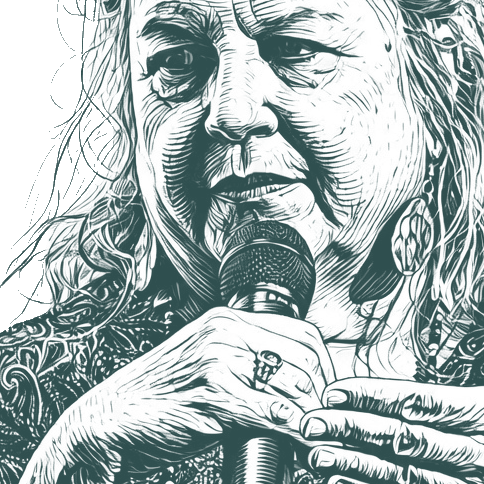
Portrait adapted from
Wikimedia Commons, Indiana Humanities (CC BY-SA)
To carry a gift is also to carry a responsibility.
Know the ways of the ones who take care of you, so that you may take care of them. Introduce yourself. Be accountable as the one who comes asking for life. Ask permission before taking. Abide by the answer. Never take the first. Never take the last. Take only what you need. Take only that which is given. Never take more than half. Leave some for others. Harvest in a way that minimizes harm. Use it respectfully. Never waste what you have taken. Share. Give thanks for what you have been given. Give a gift, in reciprocity for what you have taken. Sustain the ones who sustain you and the earth will last forever.
Try QuoteGPT
Chat naturally about what you need. Each answer links back to real quotes with citations.
To love a place is not enough. We must find ways to heal it.