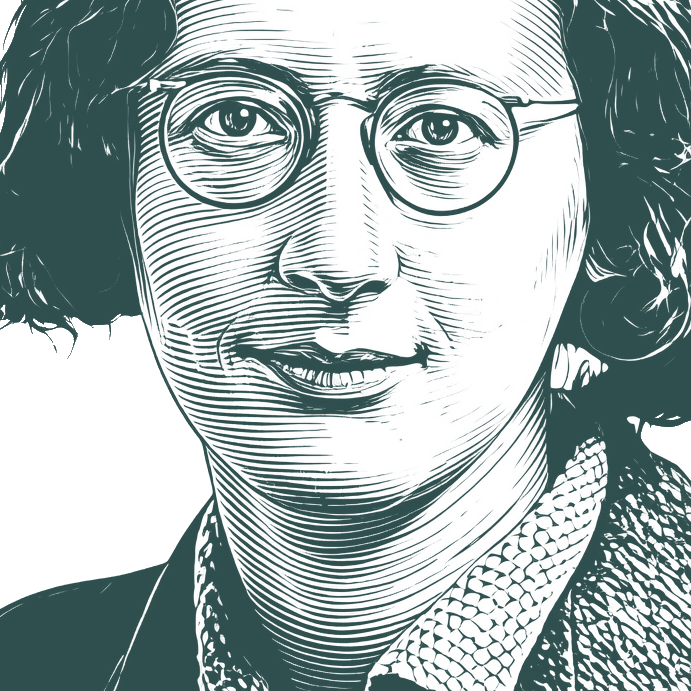
There are four evidences of divine mercy here below. The favors of God to beings capable of contemplation (these states exist and form part of their … - Simone Weil
""
There are four evidences of divine mercy here below. The favors of God to beings capable of contemplation (these states exist and form part of their experience as creatures). The radiance of these beings, and their compassion, which is the divine compassion in them. The beauty of the world. The fourth evidence is the complete absence of mercy here below.
Simone Adolphine Weil (3 February 1909 – 24 August 1943) was a French social and religious philosopher, and Christian mystic. Politically active, during the Spanish Civil War she joined the Anarchist military unit known as the Durruti Column, and took part in the French Resistance during World War II. She was the sister of mathematician André Weil, with whom she shared an interest in ancient Greek and Indian thought.
Rome is the Great Beast of atheism and materialism, adoring nothing but itself. Israel is the Great Beast of religion. Neither one nor the other is likable. The Great Beast is always repulsive.
If you say to someone who has ears to hear: "What you are doing to me is not just," you may touch and awaken at its source the spirit of attention and love. But it is not the same with words like, "I have the right..." or "you have no right to..." They evoke a latent war and awaken the spirit of contention.
Try QuoteGPT
Chat naturally about what you need. Each answer links back to real quotes with citations.
Justice. To be ever ready to admit that another person is something quite different from what we read when he is there (or when we think about him). Or rather, to read in him that he is certainly something different, perhaps something completely different from what we read in him. Every being cries out silently to be read differently.