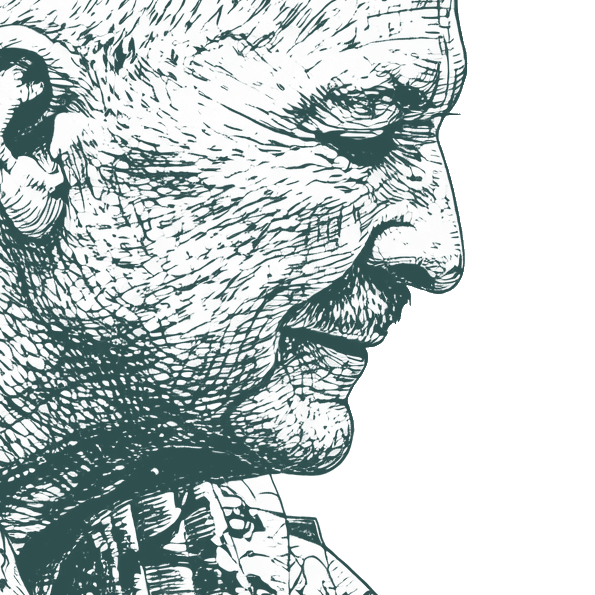
“If there was anything, anything more at all, after this crazy mix-up we call living, I could feel that there might be some point to the whole franti… - Robert A. Heinlein
""
“If there was anything, anything more at all, after this crazy mix-up we call living, I could feel that there might be some point to the whole frantic business, even if I did not know and could not know the full answer while I was alive.” “And suppose there was not? Suppose that when a man’s body disintegrates, he himself disappears absolutely. I’m bound to say I find it a probable hypothesis.” “Well— It wouldn’t be cheerful knowledge, but it would be better than not knowing. You could plan your life rationally, at least. A man might even be able to get a certain amount of satisfaction in planning things better for the future, after he’s gone. A vicarious pleasure in the anticipation.”
Robert Anson Heinlein (7 July 1907 – 8 May 1988) was one of the most popular, influential, and controversial authors of science fiction of the 20th Century.
There is no science of sociology. Perhaps there will be, some day, when a rigorous physics gives a finished science of colloidal chemistry and that leads in turn to a complete knowledge of biology, and from there to a definitive psychology. After that we may begin to know something about sociology and politics. Sometime around the year 5000 A.D., maybe—if the human race does not commit suicide before then.