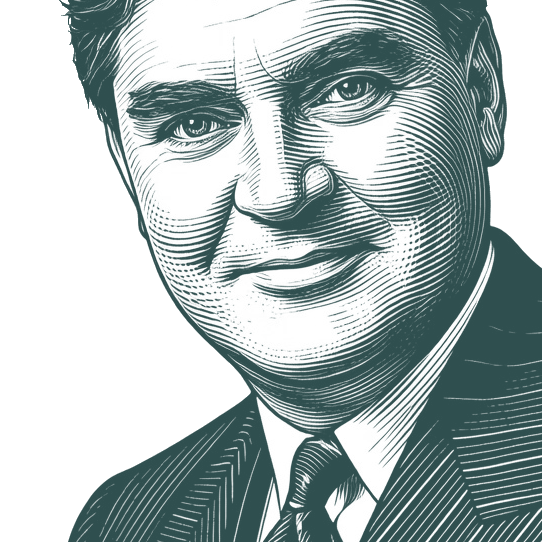
A very large part of the population of Wales was English-speaking, and the English-speaking part had a contribution just as big, if not bigger, to ma… - Aneurin Bevan
""
A very large part of the population of Wales was English-speaking, and the English-speaking part had a contribution just as big, if not bigger, to make towards Welsh cultural life than the Welsh-speaking part. A great deal of the literature of which Welshmen were proud and a great deal of the poetry for which this generation would be noted had been written in English by Welshmen.
Aneurin Bevan (15 November 1897 – 6 July 1960) was a Welsh Labour Party politician who is best known for overseeing the creation of the National Health Service in the Labour government after World War II. Bevan, a left-winger, was intermittently in trouble with the Labour leadership; in the 1950s he astonished his supporters by opposing unilateral nuclear disarmament. He overcame a speech impediment and was regarded as one of the most eloquent public speakers of his day.
Portrait adapted from
Wikimedia Commons, Howard Coster (Public domain / CC0)
The conversion of an industry to public ownership is only the first step towards Socialism. It is an all-important step, for without it the conditions of further progress are not established. One important consequence is a shift of power that resolves the conflict between public and private claims. The danger of the State machine being manipulated by private vested interests is thus reduced.
Damn it all, you can't have the crown of thorns and the thirty pieces of silver.
Works in ChatGPT, Claude, or Any AI
Add semantic quote search to your AI assistant via MCP. One command setup.
Unless we plan our resources purposefully, unless we are prepared to accept the disciplines that are necessary, we shall not be able to meet the challenge of the Communist world. As the years go by, and the people see us languishing behind, trying to prevent the evils of inflation by industrial stagnation, trying all the time to catch up with things because we have not acted soon enough—when they see the Communist world, planned, organised, publicly-owned and flaunting its achievements to the rest of the world—they will come to be educated by what they will experience. They will realise that Western democracy is falling behind in the race because it is not prepared to read intelligently the lessons of the twentieth century.