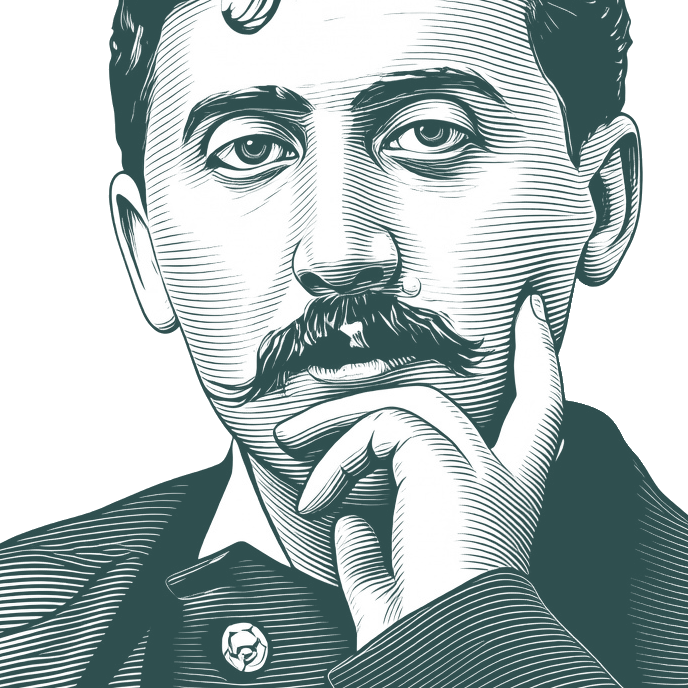
Only, we must allow time. But our demands as far as time is concerned are no less exorbitant than those which the heart requires in order to change. … - Marcel Proust
""
Only, we must allow time. But our demands as far as time is concerned are no less exorbitant than those which the heart requires in order to change. For one thing, time is the very thing that we are least willing to allow, for our suffering is acute and we are anxious to see it brought to an end. And then, too, the time which the other heart will need in order to change will have been spent by our own heart in changing itself too, so that when the goal we had set ourselves becomes attainable it will have ceased to be our goal. Besides, the very idea that it will be attainable, that there is no happiness that, when it has ceased to be a happiness for us, we cannot ultimately attain, contains an element, but only an element, of truth. It falls to us when we have grown indifferent to it. But the very fact of our indifference will have made us less exacting, and enabled us in retrospect to feel convinced that it would have delighted us had it come at a time when perhaps it would have seemed to us miserably inadequate.
Valentin Louis Georges Eugène Marcel Proust (10 July 1871 – 18 November 1922) was a French novelist, essayist and critic.
Biography information from
Wikiquote·
Portrait adapted from
Wikimedia Commons, Otto Wegener (Public domain / CC0)
Also Known As
Alternative Names:
Valentin Louis Georges Eugène Marcel Proust
•
Proust
•
Valentin Louis Georges Eugéne Marcel Proust
•
Valentin-Louis-Georges-Eugéne-Marcel Proust
•
Valentin Louis Georges Eugene Marcel Proust
•
Valentin-Louis-Georges-Eugene-Marcel Proust
•
Bernard d'Algouvres
•
Valentin-Louis-Georges-Eugène-Marcel Proust
Every person whom we love, indeed to a certain extent every person is to us like Janus, presenting to us the face that we like if that person leaves us, the repellent face if we know him or her to be perpetually at our disposal.