"May not this, then, be why the figure of the Evil One is simultaneously horrendous and alluring: he represents the extreme of ''self-othering," wher… - Alan Watts
"May not this, then, be why the figure of the Evil One is simultaneously horrendous and alluring: he represents the extreme of ''self-othering," where, on the human level, man is most ashamed of his own organism, and, on the mythological level, Brahma has lost himself most completely in the maya of separateness.
Alan Wilson Watts (6 January 1915 – 16 November 1973) was an English philosopher, writer, speaker, and expert in comparative religion.
Biography information from
Wikiquote·
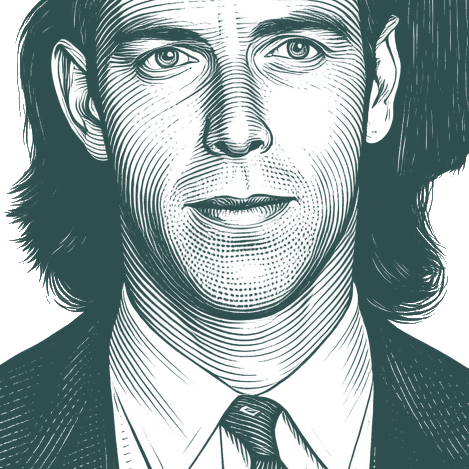
Portrait adapted from
Wikimedia Commons, The University of Vermont Alumni Magazine vol. 39 no. 01, p. 22. (Public domain / CC0)
Also Known As
Alternative Names:
Alan Wilson Watts
•
Alan W. Watts
Portrait from Wikimedia Commons. Credit: The University of Vermont Alumni Magazine vol. 39 no. 01, p. 22.. Used under Public domain / CC0. Processed and styled by Quotewise.
Unlimited Quote Collections
Organize your favorite quotes without limits. Create themed collections for every occasion with Premium.
"All perfect accomplishment in art or life is accompanied by the curious sensation that it is happening of itself - that it is not forced, studied, or contrived. Thos is not to say that everything which is felt to happen of itself is a perfect accomplishment; the marvel of human spontaneity is that it has developed the means of self-discipline - which becomes repressive only when it is felt that the controlling agent is separate from the action. But the sensation that the action is happening of itself, neither from an agent nor to a witness, is the authentic sensation of life as pure process, in which there is neither mover nor moved. Process without source or destination, verb without subject or object - this is not deprivation, a the word "without" suggests, but the "musical" sensation of arriving at every moment in which the melody and rhythm unfold."
long as the mind believes in the possibility of escape from what it is at this moment, there can be no freedom.
Unlimited Quote Collections
Organize your favorite quotes without limits. Create themed collections for every occasion with Premium.
We must abandon completely the notion of blaming the past for any kind of situation we're in and reverse our thinking and see that the past always flows back from the present. That now is the creative point of life. So you see its like the idea of forgiving somebody, you change the meaning of the past by doing that...Also watch the flow of music. The melody as its expressed is changed by notes that come later. Just as the meaning of a sentence...you wait till later to find out what the sentence means...The present is always changing the past.