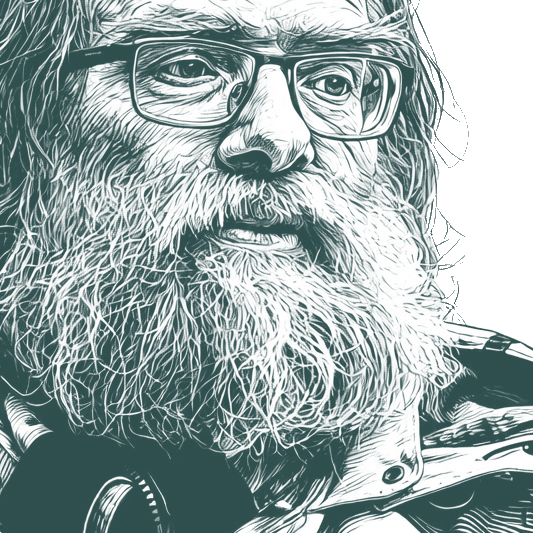
Mediocre people are good at inventing endless objections against people who really make a difference. - Koenraad Elst
""
Mediocre people are good at inventing endless objections against people who really make a difference.
English
Collect this quote
About
Koenraad Elst
Koenraad Elst (born 7 August 1959) is a Flemish right wing Hindutva author, known primarily for his support of the Out of India theory and the Hindutva movement. Scholars have accused him of harboring Islamophobia.
One consequential instance in India was the Ayodhya scholars’ debate in the winter of 1990-1991, organized by the Janata (Left-populist) government headed by Chandra Shekhar. This was won hands down by the scholars affirming the existence of a Hindu temple underneath the Babri Masjid, first against a delegation of Muslim leaders unfamiliar with historical methodology, selected by the Babri Masjid Action Committee, then against a group of Marxist academics called in by that same Committee for saving the day. The latter’s position was but an elaboration of the official orthodoxy created by a group of academics from JNU when they issued a statement, The Political Abuse of History (1989), denying the existence of temple remains underneath the Babri Masjid. It had been taken over as Gospel truth by most of the academic and journalistic India-watchers in the West, including Truschke’s mentors. They kept the lid on the debate’s outcome... After Court-ordered excavations in 2003 had definitively confirmed the existence of the temple, acknowledged in the Court verdict of 2010, they have all turned conspicuously silent on Ayodhya.
To be sure, the usual suspects are bound to oppose this civilizational viewpoint. With their studied superficiality, the secularists view India as a hodge-podge of “communities”, of which a very recent one, concocted by the “Orientalists”, is Hinduism. Just as I finish this article, my attention is drawn to a French magazine celebrating the appointment of an Indian secularist historian to the Collège de France with an interview. There, he speaks out against the very notion of a Hindu civilization. The whole is not real, only the fragments are. The notion of an over-arching civilizational unity and long-term continuity may be obvious in China, and get applause there, but in India it is “communal!” (Ch 18)
Go Premium
Support Quotewise while enjoying an ad-free experience and premium features.
At the intellectual level, Hindus will son be able to breathe freely. They will be able to rediscover and reformulate the numerous valuable expressions of the one Sanatana Dharma. They will be able to affirm the unity and integrity of this Sanatana Dharma, without being falsely accused of assimilative communalism when they restate the scientific fact that Buddhism, Jainism and Sikhism are full members of the one Hindu commonwealth of schools and sects. They will be able to reaffirm the unity and integrity of Hindu society, and to debunk the casteist and regionalist separatisms that have been fostered by its enemies and equipped with a pseudo- historical basis. They will be able to put the evils of Hindu society into the correct historical perspective on the basis of the real facts, and judge them by universal standards rather than by the hostile ad hoc standards that have been applied to Hindu society by its enemies.