Oh, what's the use of your fairmindedness if you never decide for yourself? Anyone gets hold of you and makes you do what they want. And you see thro… - E. M. Forster
""
Oh, what's the use of your fairmindedness if you never decide for yourself? Anyone gets hold of you and makes you do what they want. And you see through them and laugh at them - and do it. It's not enough to see clearly; I'm muddle-headed and stupid, and not worth a quarter of you, but I have tried to do what seemed right at the time. And you - your brain and your insight are splendid. But when you see what's right you're too idle to do it. You told me once that we shall be judged by our intentions, not by our accomplishments. I thought it a grand remark. But we must intend to accomplish - not sit intending on a chair.
English
Collect this quote
About
E. M. Forster
Edward Morgan Forster (1 January 1879 – 7 July 1970) was an English novelist, short story writer, and essayist.
Biography information from
Wikiquote·
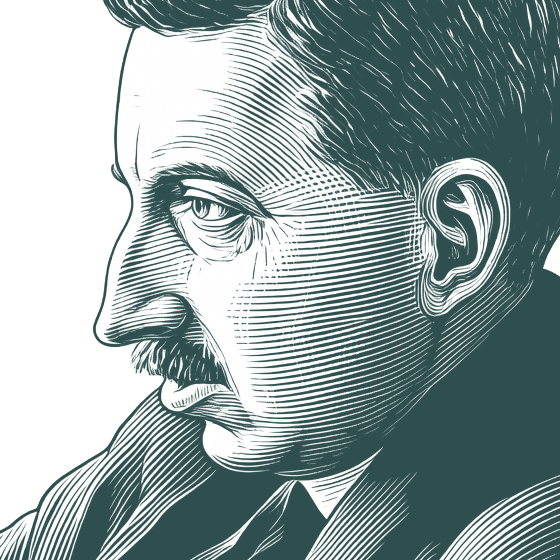
Portrait adapted from
Wikimedia Commons, Dora Carrington (1893–1932) (Public domain / CC0)
Also Known As
Birth Name:
Edward Morgan Forster
Alternative Names:
EM Forster
•
E Forster
•
Edward Forster
Nothing's the same for anyone. That's why life's this Hell, if you do a thing you're damned, and if you don't you're damned . . . .
'Why can't we be friends now?' said the other, holding him affectionately. 'It's what I want. It's what you want.' But the horses didn't want it — they swerved apart: the earth didn't want it, sending up rocks through which riders must pass single file; the temple, the tank, the jail, the palace, the birds, the carrion, the Guest House, that came into view as they emerged from the gap and saw Mau beneath: they didn't want it, they said in their hundred voices 'No, not yet,' and the sky said 'No, not there.'
Limited Time Offer
Premium members can get their quote collection automatically imported into their Quotewise collections.
Sensuality, as long as it is straightforward did not repel him, but this derived sensuality - the sort that classes a mistress among motor-cars if she is beautiful, and among eye-flies if she isn't - was alien to his own emotions . . . It was, in a new form, the old, old trouble that eats the heart out of every civilization: snobbery, the desire for possessions, creditable appendages; and it is to escape this rather than the lusts of the flesh that the saints retreat into the Himalayas.