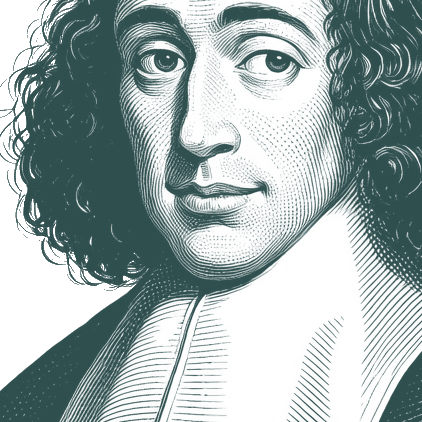
Machiavelli is not in the least utopian; he simply thinks the conjunctural case of the thing, and goes dietro alla verità effettuale della cosa. He a… - Benedictus de Spinoza
""
Machiavelli is not in the least utopian; he simply thinks the conjunctural case of the thing, and goes dietro alla verità effettuale della cosa. He asserts it in concepts which are philosophical and no doubt make him, in his temerity, solitude and scorn for the philosophers of the tradition, the greatest materialist philosopher in history – the equal of Spinoza, who declared him "acutissimus', most acute. Spinoza considered him acutissimus in politics. He would appear not to have suspected that Machiavelli was also most incisive in materialist philosophy.
English
Collect this quote
About
Benedictus de Spinoza
Benedictus de Spinoza (24 November 1632 – 21 February 1677) was a social and metaphysical philosopher known for the elaborate development of his monist philosophy, which has become known as Spinozism. Controversy regarding his ideas led to his excommunication from the Jewish community of his native Amsterdam. He was named Baruch ("blessed" in Hebrew) Spinoza by his synagogue elders and known as Bento de Spinoza or Bento d'Espiñoza, but afterwards used the name Benedictus ("blessed" in Latin) de Spinoza.
Native Name:
בָּרוּךְ שְׂפִּינוֹזָה
•
Benedito de Espinosa
Alternative Names:
Benedict de Spinoza
•
Baruch de Espinosa
•
Barukh Shpinozah
•
Benoît de Spinoza
•
Sbīnūzā
•
Ispīnūzā
•
Barukh Spinoza
•
Bento de Espinosa
•
Baruch d' Espinoza
•
Shpinozah
•
Baruch de Spinoza
•
Spinoza
•
Benoit de Spinoza
•
Benedictus De Spinoza
•
Benedictus Spinoza
•
Baruch Spinoza
•
Baruch Benedictus de Spinoza
The endeavor to understand is the first and only basis of virtue.
إنَّ بعض اليهود يَرَون أنَّ الله لم ينطق بألفاظ الوصايا العشر حرفيًّا، ويعتقدون أن الإسرائيليين سَمِعوا مُجرَّد ضوضاء عالية لا تتميَّز فيها الكلمات، وخلال هذه الضوضاء أدرَكوا بالفكر الخالِص الوصايا العشر. ولقد كنتُ أنا شخصيًّا أَميل إلى هذا الرأي بعدَ أن لحظتُ أن نصَّ الوصايا العشر يختلف في سِفر الخروج عنه في سفر التثنية، فبدا لي بناء على ذلك (نظرًا إلى أن الله لم يتكلَّم إلَّا مرَّةً واحدة) أنَّ الوصايا العشر لا تنقِل إلينا كلمات الله بعَينها، بل تُعبِّر عن معناها فحسب، ومع ذلك إذا لم نشأ تحريف الكتاب يَجِب أن نُسلِّم، على أية حال، بأن الإسرائيليين قد سمِعوا صوتًا حقيقيًّا، فنحن نقرأ صراحة (التثنية، ٥: ٤): «وجهًا لوجه تكلَّم إليكم الرب.» أي كما تَنتقِل الأفكار من شخصٍ لآخر بِتوسُّط بدَنِهما، فَلِكي نكون أكثرَ اتفاقًا مع الكتاب نقول: إنَّ الله قد خلق صوتًا حقيقيًّا ليُوحي من خلاله بالوصايا العشر
PREMIUM FEATURE
Advanced Search Filters
Filter search results by source, date, and more with our premium search tools.
Over the centuries, there have been periodic calls for the herem against Spinoza to be lifted. Even David Ben-Gurion, when he was prime minister of Israel, issued a public plea for ‘amending the injustice’ done to Spinoza by the Amsterdam Portuguese community. It was not until early 2012, however, that the Amsterdam congregation, at the insistence of one of its members, formally took up the question of whether it was time to rehabilitate Spinoza and welcome him back into the congregation that had expelled him with such prejudice. There was, though, one thing that they needed to know: should we still regard Spinoza as a heretic? Unfortunately, the herem document fails to mention specifically what Spinoza's offences were – at the time he had not yet written anything – and so there is a mystery surrounding this seminal event in the future philosopher's life. And yet, for anyone who is familiar with Spinoza's mature philosophical ideas, which he began putting in writing a few years after the excommunication, there really is no such mystery. By the standards of early modern rabbinic Judaism – and especially among the Sephardic Jews of Amsterdam, many of whom were descendants of converso refugees from the Iberian Inquisitions and who were still struggling to build a proper Jewish community on the banks of the Amstel River – Spinoza was a heretic, and a dangerous one at that.