"In a universe whose fundamental principle is relativity rather than warfare there is no purpose because there is no victory to be won, no end to be … - Alan Watts
"In a universe whose fundamental principle is relativity rather than warfare there is no purpose because there is no victory to be won, no end to be attained. For every end, as the world itself shows, is an extreme, an opposite, and exists only in relation to it other end. Because the world is not going anywhere there is no hurry. One may as well "take it easy" like nature itself [...]."
Alan Wilson Watts (6 January 1915 – 16 November 1973) was an English philosopher, writer, speaker, and expert in comparative religion.
Biography information from
Wikiquote·
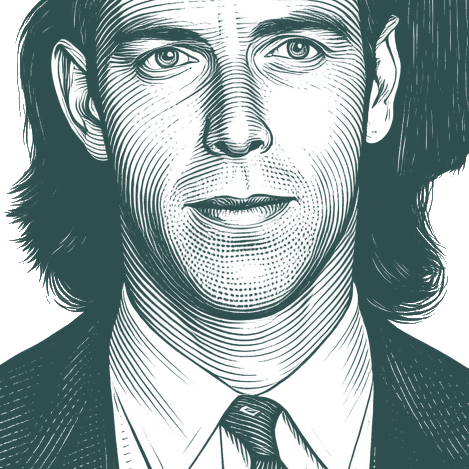
Portrait adapted from
Wikimedia Commons, The University of Vermont Alumni Magazine vol. 39 no. 01, p. 22. (Public domain / CC0)
Also Known As
Alternative Names:
Alan Wilson Watts
•
Alan W. Watts
Portrait from Wikimedia Commons. Credit: The University of Vermont Alumni Magazine vol. 39 no. 01, p. 22.. Used under Public domain / CC0. Processed and styled by Quotewise.
Go Premium
Support Quotewise while enjoying an ad-free experience and premium features.
If I first see a tree in the winter, I might assume that it is not a fruit-tree. But when I return in the summer to find it covered with plums, I must exclaim, 'Excuse me! You were a fruit-tree after all.' Imagine, then, that a billion years ago some beings from another part of the galaxy made a tour through the solar system in their flying saucer and found no life. They would dismiss it as 'Just a bunch of old rocks!' But if they returned today, they would have to apologize: 'Well - you were peopling rocks after all!' You may, of course, argue that there is no analogy between the two situations. The fruit-tree was at one time a seed inside a plum, but the earth - much less the solar system or the galaxy - was never a seed inside a person. But, oddly enough, you would be wrong.
According to convention, I am not simply what I am doing now. I am also what I have done, and my conventionally edited version of my past is made to seem almost more the real “me” than what I am at this moment. For what I am seems so fleeting and intangible, but what I was is fixed and final. It is the firm basis for predictions of what I will be in the future, and so it comes about that I am more closely identified with what no longer exists than with what actually is!
PREMIUM FEATURE
Advanced Search Filters
Filter search results by source, date, and more with our premium search tools.
"This state of affairs is known technically as the "double-bind." A person is put in a double-bind by a command or request which contains a concealed contradiction... This is a damned-if-you-do and damned-if-you-don't situation which arises constantly in human (and especially family) relations...
The social doublebind game can be phrased in several ways:The first rule of this game is that it is not a game. Everyone must play. You must love us. You must go on living. Be yourself, but play a consistent and acceptable role. Control yourself and be natural. Try to be sincere. Essentially, this game is a demand for spontaneous behavior of certain kinds. Living, loving, being natural or sincere — all these are spontaneous forms of behavior: they happen "of themselves" like digesting food or growing hair. As soon as they are forced they acquire that unnatural, contrived, and phony atmosphere which everyone deplores — weak and scentless like forced flowers and tasteless like forced fruit. Life and love generate effort, but effort will not generate them. Faith — in life, in other people, and in oneself — is the attitude of allowing the spontaneous to be spontaneous, in its own way and in its own time."