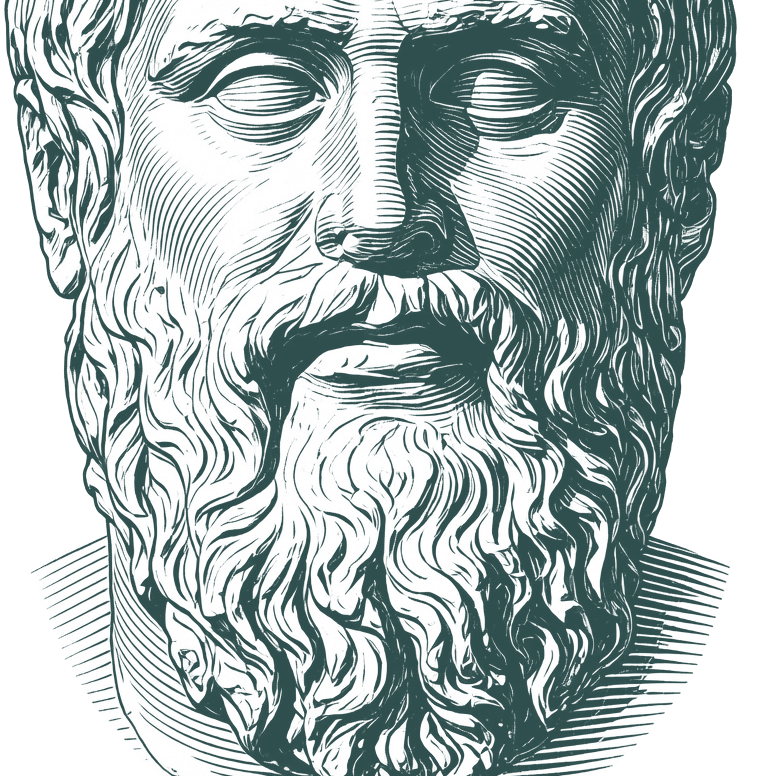
I prefer nothing, unless it is true. - Plato

" "

I prefer nothing, unless it is true.

English
Collect this quote

About Plato

Plato (Πλάτων Plátōn; c. 427 BC – c. 347 BC) was a Greek philosopher from Athens during the Classical period in Ancient Greece, founder of the Platonist school of thought and the Academy (Akademia), the first institution of higher learning in the Western world.

Biography information from Wikiquote

Also Known As

Native Name: Πλάτων
Alternative Names: Plátōn Platon Aristocles Αριστοκλής Ἀριστοκλῆς
Works in ChatGPT, Claude, or Any AI

Add semantic quote search to your AI assistant via MCP. One command setup.

Related quotes. More quotes will automatically load as you scroll down, or you can use the load more buttons.

Additional quotes by Plato

And when the father who begat it perceived the created image of the eternal gods, that it had motion and life, he rejoiced and was well pleased; and he bethought him to make it yet more nearly like its pattern. Now whereas that is a living being eternally existent, even so he essayed to make this All the like to the best of his power. Now so it was that the nature of the ideal was eternal. But to bestow this attribute altogether upon a created thing was impossible; so he bethought him to make a moving image of eternity, and while he was ordering the universe he made of eternity that abides in unity an eternal image moving according to number, even that which we have named time. For whereas days and nights and months and years were not before the universe was created, he then devised the generation of them along with the fashioning of the universe. Now all these are portions of time, and was and shall be are forms of time that have come to be, although we wrongly ascribe them unawares to the eternal essence. For we say that it was and is and shall be, but in verity is alone belongs to it: and was and shall be it is meet should be applied only to Becoming which moves in time; for these are motions. But that which is ever changeless without motion must not become elder or younger in time, neither must it have become so in past nor be so in the future; nor has it to do with any attributes that Becoming attaches to the moving objects of sense: these have come into being as forms of time, which is the image of eternity and revolves according to number. Moreover we say that the become is the become, and the becoming is the becoming, and that which shall become is that which shall become, and not-being is not-being. In all this we speak incorrectly. But concerning these things the present were perchance not the right season to inquire particularly.

No man should bring children into the world who is unwilling to persevere to the end in their nature and education.

Socrates: I think the most likely view is, that these ideas exist in nature as patterns, and the other things resemble them and are imitations of them; their participation in ideas is assimilation to them, that and nothing else.
Parmenides: It is impossible that anything be like the idea, or the idea like anything; for if they are alike, some further idea, in addition to the first, will always appear, and if that is like anything, still another, and a new idea will always be arising, if the idea is like that which partakes of it.

Loading...