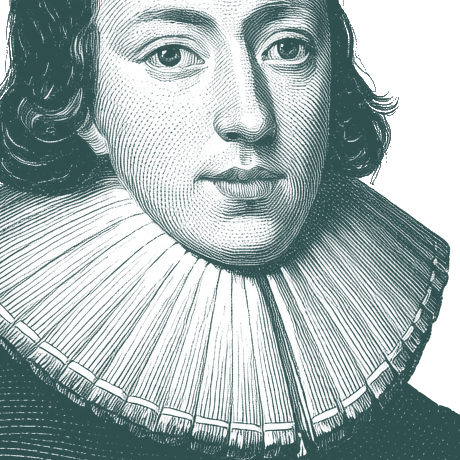
We boast our light; but if we look not wisely on the run itself, it smites us into darkness. Who can discern those planets that are oft combust, and … - John Milton
""
We boast our light; but if we look not wisely on the run itself, it smites us into darkness. Who can discern those planets that are oft combust, and those starts of brightest magnitude that rise and set with the sun, until the opposite motion of their orbs bring them to such a place in the firmament where they may be seen evening or morning? The light which we have gained was given us, not to be ever staring on, but by it to discover onward things more remote from our knowledge.
John Milton (9 December 1608 – 8 November 1674) was an English poet, polemicist, man of letters, and a civil servant for the Commonwealth of England under Oliver Cromwell. He wrote at a time of religious flux and political upheaval, and is most famous for his epic poem Paradise Lost (1667), written in blank verse.
Whose but his own? ingrate, he had of mee All he could have; I made him just and right, Sufficient to have stood, though free to fall. Such I created all th’ Ethereal Powers And Spirits, both them who stood and them who fail’d; Freely they stood who stood, and fell who fell. Not free, what proof could they have giv’n sincere Of true allegiance, constant Faith or Love, Where only what they needs must do, appear’d, Not what they would? what praise could they receive? What pleasure I from such obedience paid, When Will and Reason (Reason also is choice) Useless and vain, of freedom both despoil’d, Made passive both, had served necessity, Not mee. They therefore as to right belong’d, So were created, nor can justly accuse Thir maker, or thir making, or thir Fate; As if Predestination over-rul’d Thir will, dispos’d by absolute Decree Or high foreknowledge; they themselves decreed Thir own revolt, not I; if I foreknew Foreknowledge had no influence on their fault, Which had no less prov’d certain unforeknown. So without least impulse or shadow of Fate, Or aught by me immutable foreseen, They trespass, Authors to themselves in all Both what they judge and what they choose; for so I form’d them free, and free they must remain, Till they enthrall themselves: I else must change Thir nature, and revoke the high Decree Unchangeable, Eternal, which ordain’d Thir freedom: they themselves ordain’d thir fall.
Many a man lives a burden to the Earth, but a good book is the precious life-blood of a master spirit, imbalmed and treasured up on purpose to a life beyond life.
PREMIUM FEATURE
Advanced Search Filters
Filter search results by source, date, and more with our premium search tools.