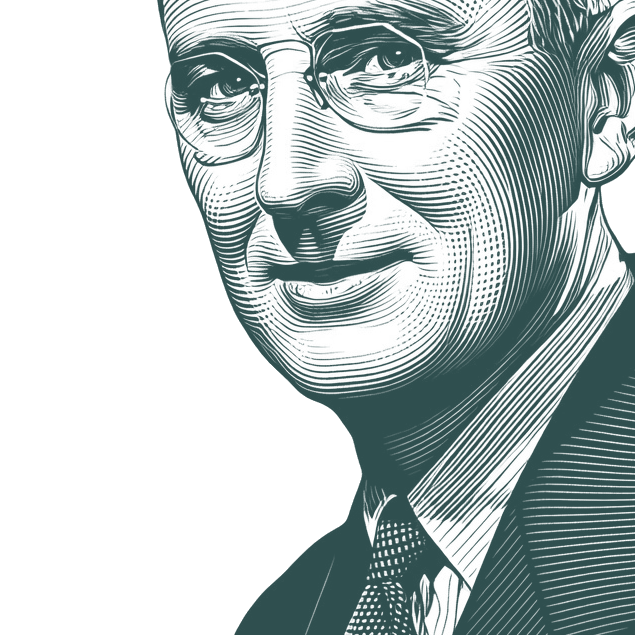
إن التفكير الجيد يتعامل مع الأسباب والمؤثرات ويؤدي إلى التخطيط المنطقي والبناء فيما يؤدي التفكير السيء عادة إلى التوتر والإنهيار العصبي - Dale Carnegie
""
إن التفكير الجيد يتعامل مع الأسباب والمؤثرات ويؤدي إلى التخطيط المنطقي والبناء فيما يؤدي التفكير السيء عادة إلى التوتر والإنهيار العصبي
Arabic
Collect this quote
About
Dale Carnegie
Dale Harbison Carnegie [originally Carnagey until 1919] (November 24, 1888 – November 1, 1955) was an American writer, lecturer and the developer of famous courses in self-improvement, salesmanship, corporate training, public speaking and interpersonal skills. Born in poverty on a farm in Missouri, he was the author of How to Win Friends and Influence People, first published in 1936, a massive bestseller that remains popular today. He also wrote a biography of Abraham Lincoln, entitled Lincoln the Unknown, as well as several other books.
In a Nutshell - Six Ways To Make People Like You • Principle 1 - Become genuinely interested in other people. • Principle 2 - Smile. • Principle 3 - Remember that a person's name is to that person the sweetest and most important sound in any language. • Principle 4 - Be a good listener. Encourage others to talk about themselves. • Principle 5 - Talk in terms of the other person's interests. • Principle 6 - Make the other person feel important-and do it sincerely.
When life gives you lemons, make lemonade
Plato said that “the greatest mistake physicians make is that they attempt to cure the body without attempting to cure the mind; yet the mind and body are one and should not be treated separately”!