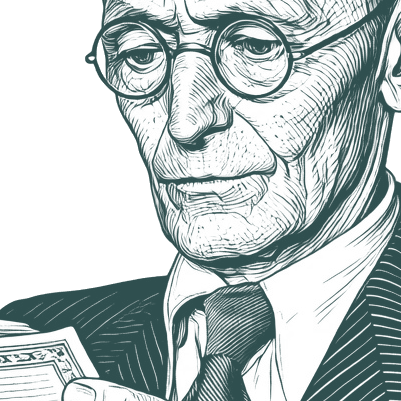
The defendant did not know until this hour, or could not really believe, that his apostasy and aberration were a test... His suffering became too gre… - Hermann Hesse
""
The defendant did not know until this hour, or could not really believe, that his apostasy and aberration were a test... His suffering became too great, and you know that as soon as suffering becomes acute enough, one goes forward. p.83
English
Collect this quote
About
Hermann Hesse
Hermann Karl Hesse (2 July 1877 – 9 August 1962) was a German-Swiss poet, novelist, and painter. In 1946, he received the Nobel Prize in Literature. His most famous works include Steppenwolf, Siddhartha, and The Glass Bead Game (also known as Magister Ludi) all of which explore an individual's search for spirituality.
Since life may summon us at every age Be ready, heart, for parting, new endeavor, Be ready bravely and without remorse To find new light that old ties cannot give.
Wisdom is not communicable. The wisdom which a wise man tries to communicate always sounds foolish... Knowledge can be communicated, but not wisdom. One can find it, live it, do wonders through it, but one cannot communicate and teach it.
Limited Time Offer
Premium members can get their quote collection automatically imported into their Quotewise collections.