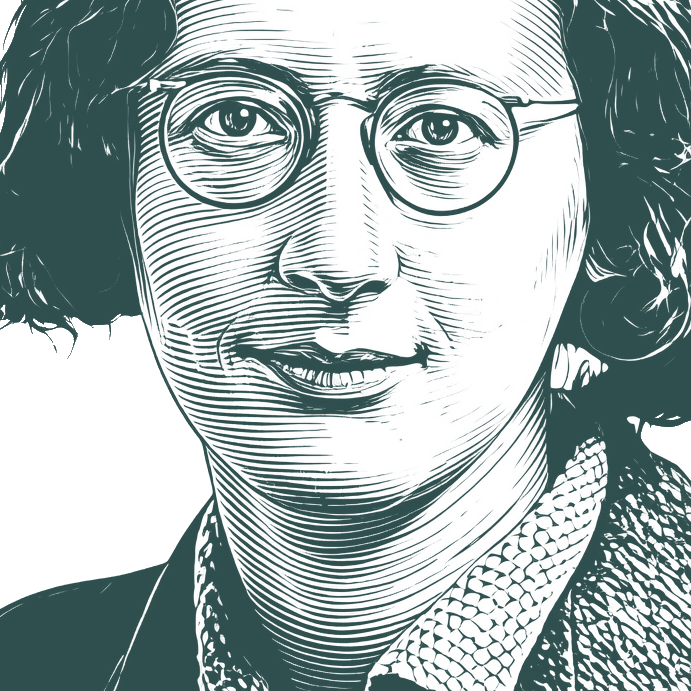
Human existence is so fragile a thing and exposed to such dangers that I cannot love without trembling. - Simone Weil

" "

Human existence is so fragile a thing and exposed to such dangers that I cannot love without trembling.

English
Collect this quote

About Simone Weil

Simone Adolphine Weil (3 February 1909 – 24 August 1943) was a French social and religious philosopher, and Christian mystic. Politically active, during the Spanish Civil War she joined the Anarchist military unit known as the Durruti Column, and took part in the French Resistance during World War II. She was the sister of mathematician André Weil, with whom she shared an interest in ancient Greek and Indian thought.

Biography information from Wikiquote

Also Known As

Pen Names: Émile Novis S. Galois
Alternative Names: Simone Adolphine Weil
Try QuoteGPT

Chat naturally about what you need. Each answer links back to real quotes with citations.

Related quotes. More quotes will automatically load as you scroll down, or you can use the load more buttons.

Additional quotes by Simone Weil

Imagination and fiction make up more than three quarters of our real life.

Religion in so far as it is a source of consolation is a hindrance to true faith; and in this sense atheism is a purification. I have to be an atheist with that part of myself which is not made for God. Among those in whom the supernatural part of themselves has not been awakened, the atheists are right and the believers wrong.

Go Premium

Support Quotewise while enjoying an ad-free experience and premium features.

View Plans
We live in a world of unreality and dreams. To give up our imaginary position as the center, to renounce it, not only intellectually but in the imaginative part of our soul, that means to awaken to what is real and eternal, to see the true light and hear the true silence...To empty ourselves of our false divinity, to deny ourselves, to give up being the center of the world in imagination, to discern that all points in the world are equally centers and that the true center is outside the world, this is to consent to the rule of mechanical necessity in matter and of free choice at the center of each soul. Such consent is love. The face of this love, which is turned toward thinking persons, is the love of our neighbor; the face turned toward matter is love of the order of the world, or love of the beauty of the world which is the same thing.

Loading...