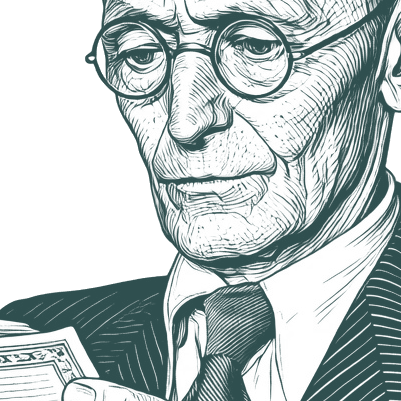
Hermann Karl Hesse (2 July 1877 – 9 August 1962) was a German-Swiss poet, novelist, and painter. In 1946, he received the Nobel Prize in Literature. His most famous works include Steppenwolf, Siddhartha, and The Glass Bead Game (also known as Magister Ludi) all of which explore an individual's search for spirituality.
Every age, every culture, every custom and tradition has its own character, its own weakness and its own strength, its beauties and ugliness; accepts certain sufferings as matters of course, puts up patiently with certain evils. Human life is reduced to real suffering, real hell, only when two ages, two cultures and religions overlap. A man of the Classical Age who had to live in medieval times would suffocate miserably just as a savage does in the midst of our civilization. Now there are times when a whole generation is caught in this way between two ages, two modes of life, with the consequence that it loses all power to understand itself and has no standard, no security, no simple acquiescence. Naturally, everyone does not feel this equally strongly. A nature such as Nietzsche’s had to suffer our present ills more than a generation in advance. What he had to go through alone and misunderstood, thousands suffer today.
How could I fail to be a lone wolf, and an uncouth hermit, as I did not share one of its aims nor understand one of its pleasures?
PREMIUM FEATURE
Advanced Search Filters
Filter search results by source, date, and more with our premium search tools.
Yes Siddhartha,' he said. 'Is this what you mean: that the river is in all places at once, at its source and where it flows into the sea, at the waterfall, at the ferry, at the rapids, in the ocean, in the mountains, everywhere at once, so for the river there is only the present moment and not the shadow of the future?'
'It is,' Siddhartha said.'And once I learned this I considered my life, and it too was a river, and the boy Siddhartha was separated from the man Siddhartha and the graybeard Siddhartha only by shadows, not by real things. ... Nothing was, nothing will be; everything is, everything has being and presence.