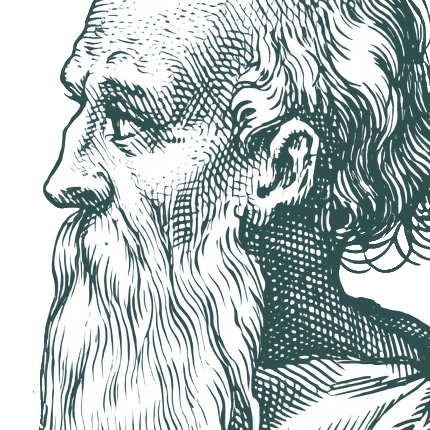
To accuse others for one's own misfortune is a sign of want of education. To accuse oneself shows that one's education has begun. To accuse neither o… - Epictetus
""
To accuse others for one's own misfortune is a sign of want of education. To accuse oneself shows that one's education has begun. To accuse neither oneself nor others shows that one's education is complete.
Epictetus (c. 55 – c. 135 AD), born a slave, was a Greek Stoic philosopher. His words were recorded by his student Arrian in the Discourses and Enchiridion written in the early 2nd-century.
Biography information from
Wikiquote·
Portrait adapted from
Wikimedia Commons, Theodoor Galle (Public domain / CC0)
Also Known As
Native Name:
ΕΠΙΚΤΗΤΟΣ
Alternative Names:
Epictetus of Hierapolis
•
Epiktetos
The first and most necessary place in philosophy is the use of theorems, for instance, that we must not lie: the second part is that of demonstrations, for instance, How is it proved that we ought not to lie: the third is that which is confirmatory of these two and explanatory.
Enchiridion 52, the handbook of Epictetus's teaching compiled by his student Arrian.
Does a man bathe quickly? do not say that he bathes badly, but that he bathes quickly. Does a man drink much wine? do not say that he does this badly, but say that he drinks much. For before you shall have determined the opinion, how do you know whether he is acting wrong?
Enchiridion 45, the handbook of Epictetus's teaching compiled by his student Arrian.
Works in ChatGPT, Claude, or Any AI
Add semantic quote search to your AI assistant via MCP. One command setup.