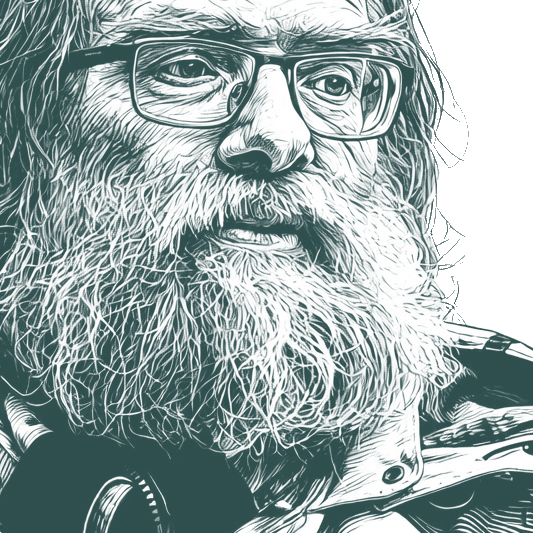
“Contrary to what Christopher Fleming claims, the court-ordered excavations in 2003 did yield evidence that the structure replaced a Hindu temple: th… - Koenraad Elst
""
“Contrary to what Christopher Fleming claims, the court-ordered excavations in 2003 did yield evidence that the structure replaced a Hindu temple: this (rather than the plentiful documentary evidence) was the main ground for the UP High Court's 2010 verdict. It confirmed what earlier partial excavations since 1974 had found. Far from being a ‘Hindutva concoction’, it was confirmed by the participant senior archaeologist KK Mohammed. The High Court also called a line-up of ‘eminent historians’ who had earlier pleaded in public that there never had been a temple there, to the witness stand. One after another, they collapsed and were reduced to stammering: ‘I have never been to the site’, ‘I am not an archaeologist’; their evidence for a non-temple scenario amounted to exactly zero, and they were fiercely reprimanded by the Court for their misuse of authority to mislead the public.
English
Collect this quote
About
Koenraad Elst
Koenraad Elst (born 7 August 1959) is a Flemish right wing Hindutva author, known primarily for his support of the Out of India theory and the Hindutva movement. Scholars have accused him of harboring Islamophobia.
The extremely brazen-faced application of double standards in the name of secularism was a ubiquitous feature of the media's reporting and comment on the Gujarat riots. By now the complaint that "you secularists weren't half as indignant, in fact entirely uninterested, when a quarter million Hindus were cleansed from Kashmir" is entirely worn out and boring, but only because it remains unanswered and hence in need of being repeated.
Islam has till today retained a lot of its medieval self- righteousness. While native Americans who claim back ancestral sacred places may have to confront economical interests, juridical technicalities or other small-human opposition against their demands, there is now hardly any ideologically motivated resistance against respecting their culture and their historical sensitivities. But in India, and in the countries which Islam has carved out of if, there is still a strong presence of an ideological drive to islamize India, and to make this clear by wresting all kinds of real and symbolical concessions from the Hindus, and by refusing them any concession whatsoever in return. The symbols of humiliation that have been inflicted on the Hindus, are being defended.
Throughout the whole field of Hindu Studies, you just have to get used to the omnipresence, though in different doses, of the Marxist-inspired reduction of religion to worldly categories. Prominent among these is “appropriation”, as in e.g. “cultural appropriation” or indeed “sacredness as a form of land appropriation”. There are power dynamics, to be sure, but you’re never going to understand Rama worship and the place of the Ayodhya site in it by forever dragging it down to the political level; just as Romila Thapar or Richard Eaton were fated never to understand the Muslim invaders’ iconoclastic zeal given their reduction of temple destruction to a mere political statement. It is an occupational hazard of post-religious scholars of (or opinionators on) religion that they just don’t understand the passion involved in their subject, including the destructive passion springing from a religion’s iconoclastic doctrine.