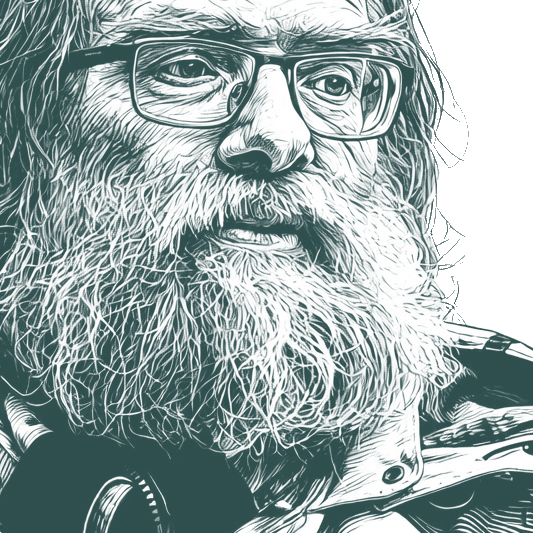
Until Mr. Van Lysebeth shows an authentic Hindu source explaining these destructive historical references as the real meaning of the elements of the … - Koenraad Elst
""
Until Mr. Van Lysebeth shows an authentic Hindu source explaining these destructive historical references as the real meaning of the elements of the Vedic sacrifice, 1 would describe his suspicion that “Indians are careful not to tell us”, as a good example of interpretative delusion, a common symptom in paranoia patients. ‘When someone is obsessed with a belief which is not well supported by reality, he starts giving distorted interpretations to ordinary events, e.g. seeing a genocide commemoration in an ordinary sacrifice ritual. The most lucid students of Vedic and other rituals have lately been emphasizing that rituals are not meant to “symbolize” anything in the first place. And if throwing grains into the fire symbolizes the destruction of someone else’s harvest, are we going to accept that all sacrifices of animals, flowers etc. in all the religions of the world prove that all the communities concerned have a history of genocide and that their commemorative rituals seem harmless only to the naive observer? Clearly, one of Mr. Van Lysebeth’s sources has been projecting his own ethno-paranoid notions onto normal religious practices which are merely the Vedic representatives of a world-wide tradition of ritual and sacrifice.
English
Collect this quote
About
Koenraad Elst
Koenraad Elst (born 7 August 1959) is a Flemish right wing Hindutva author, known primarily for his support of the Out of India theory and the Hindutva movement. Scholars have accused him of harboring Islamophobia.
It is quite possible to teach people universal values and awareness of the larger whole, without breaking open the existing divisions in society. Actually, calling clans and tribes a division conceals the fact that they are just as much units, levels of integration. Few buildings these days are built from one massive rock ; the normal thing to do is to integrate smaller units into bigger and yet bigger ones. The global civilization which we are building today, will not be made up of scattered individuals. Organizationally, it will be a hierarchy of intermediary levels of integration, a two- way combination of unity and diversity. The current revival of ethnicity throughout the world is just one example of man's natural resistance against atomization.
Indeed, no amount of history rewriting can alter the fact that India was partitioned (over nearly a million dead bodies) under Muslim pressure, and that what was carved out of India was an Islamic state. And no amount of hermeneutics can interpret this as an act of loyalty towards India. From the viewpoint of pluralistic and democratic India, the 93% Muslim voters just before Independence who voted for the Muslim League wit its one-point programme of partitioning India and creating Pakistan, were effectively traitors.
Limited Time Offer
Premium members can get their quote collection automatically imported into their Quotewise collections.
Isn’t that funny: people wearing the mantle of the academic quest for knowledge who denounce the search for knowledge on the dogmatic plea that the outcome is known beforehand? ...Even back then, given all the earlier evidence, everything indicated that something would be discovered. They themselves cannot have been ignorant of this, so their opposition was a deliberate attempt to obstruct the progress of scientific knowledge.