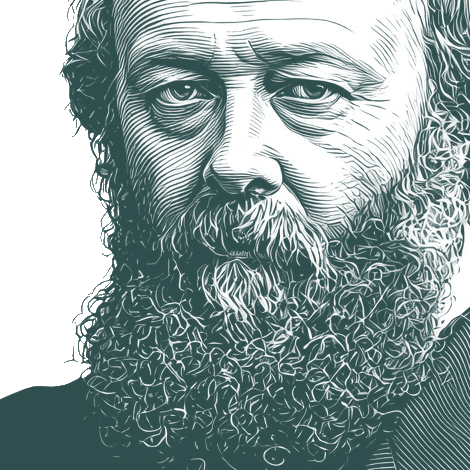
What advantage does my noble Friend think could be derived by humanity, civilization or commerce from leaving the vast tracts of territory which he h… - Robert Gascoyne-Cecil, 3rd Marquess of Salisbury
""
What advantage does my noble Friend think could be derived by humanity, civilization or commerce from leaving the vast tracts of territory which he has described to be simply wandered over by naked savages or to be the hunting ground of slavers?
About
Robert Gascoyne-Cecil, 3rd Marquess of Salisbury
Robert Arthur Talbot Gascoyne-Cecil, 3rd Marquess of Salisbury (3 February 1830 – 22 August 1903), styled Lord Robert Cecil before the death of his elder brother in 1865, and Viscount Cranborne from June 1865 until his father died in April 1868, was a three-time Prime Minister of the United Kingdom, during 1885–1886, 1886–1892 and 1895–1902.
Native Name:
Robert Gascoyne-Cecil, 3. Marquess of Salisbury
Alternative Names:
Robert Gascoyne-Cecil
•
Robert Arthur Talbot Gascoyne-Cecil
•
Robert Arthur Talbot Gascoyne-Cecil, 3rd Marquess of Salisbury
•
Robert Arthur Talbot Gascoigne Cecil, Marquis of Salisbury
Additional quotes by Robert Gascoyne-Cecil, 3rd Marquess of Salisbury
[T]hat shapeless, formless, fibreless mass of platitudes which in official cant is called "unsectarian religion".
There is now before us one great issue by which all others are overshadowed. We have to determine whether the great Empire that we have inherited from our forefathers and which is the glory of us all (cheers) is to exist or to be destroyed.
Go Premium
Support Quotewise while enjoying an ad-free experience and premium features.
I consider the loss of Constantinople would be the ruin of our party and a heavy blow to the country: and therefore I am anxious to delay by all means Russia's advance to that goal. A pacific and economical policy is up to a certain point very wise: but it is evident that there is a point beyond which it is not wise either in a patriotic or party sense—and the question is where we shall draw the line. I draw it at Constantinople. My belief is that the main strength of the Tory party, both in the richer and poorer classes, lies in its association with the honour of the country. It is quite true that if, in order to save that honour, we have to run into expense, we shall suffer as a party—that is human nature. But what I contend is, that we shall suffer as a party more—much more—if the loss of Constantinople stands on our record.