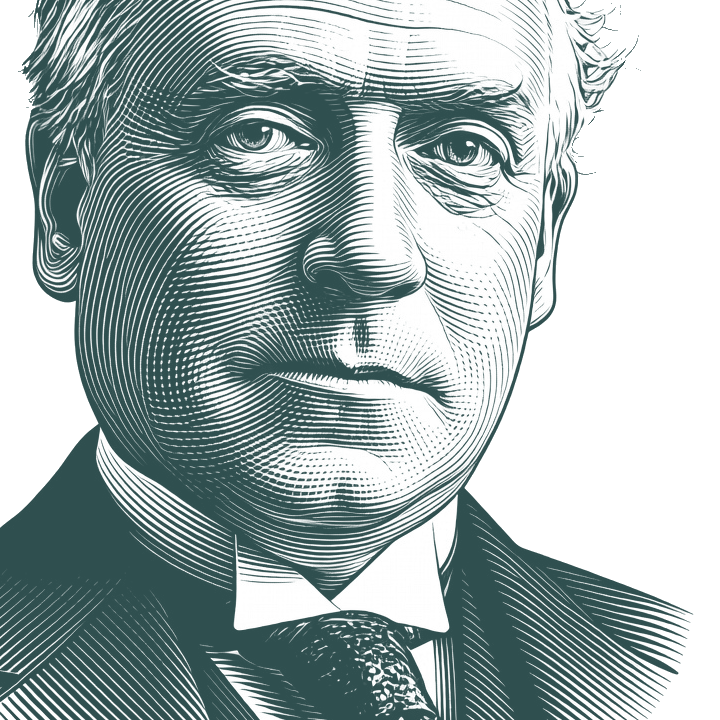
[T]he idea of public right. What does it mean when translated into concrete terms? It means first and foremost, the clearing of the ground by the def… - H. H. Asquith
""
[T]he idea of public right. What does it mean when translated into concrete terms? It means first and foremost, the clearing of the ground by the definite repudiation of militarism as the governing factor in the relations of States and of the future moulding of the European world. It means next that room must be found and kept for the independent existence and the free development of the smaller nationalities each with a corporate consciousness of its own. ... And it means finally, or it ought to mean, perhaps, by a slow and gradual process, the substitution for force, for the class of competing ambition, for groupings and alliances and a precarious equipoise, of a real European partnership based on the recognition of equal right and established and enforced by a common will.
Herbert Henry Asquith, 1st Earl of Oxford and Asquith, KG, PC (12 September 1852 – 15 February 1928) was Prime Minister of the United Kingdom from 1908 to 1916. As Prime Minister, his Liberal Party government passed social legislation beginning the modern British welfare state and reducing the power of the House of Lords. He was the leader of the country during World War I and formed a wartime coalition with the Conservative Party. He was was forced to resign in favor of David Lloyd George due to disagreements over military strategy and conscription, leading to a split between the two that began the decline of the Liberal Party.
Portrait adapted from
Wikimedia Commons, Bain News Service (Public domain / CC0)
Also Known As
Birth Name:
Herbert Henry Asquith
Alternative Names:
Herbert Asquith
•
Herbert Henry Asquith, 1st Earl of Oxford and Asquith
[O]ne thing is certain, that the Budget of next year will stand at the very centre of our work, by which, I was going to say, we shall stand or fall, by which certainly we shall be judged in the estimation both of the present and of posterity.
The Income Tax at 6s., 5s., 4s. 6d.—I go further, and say, even at 4s.—is, in my opinion, a bad and pernicious form of capital levy... The effect of such an Income Tax...is not merely to curtail the enjoyments and comforts of a large number of our middle classes. Its effect is to dry up the stream which fertilises the whole field of employment and of industry. I should have thought that no class of the community is more directly interested in a reduction of the Income Tax to—I will not say the pre-War standard, for that is out of sight now, and an utter impossibility—but to a reasonable and moderate standard, than those people who gain their living by the work of their hands. It is not a class question at all. It affects the interests of the whole business world and the whole future of British trade.
Go Premium
Support Quotewise while enjoying an ad-free experience and premium features.
Some of the great results of the war, if they are adequately realized, are in complete harmony with what for ages past have been Liberal aims and ideals. I mean, for instance, the abolition of militarism; I mean the progressive disarmament of the civilized peoples of the world; I mean the recognition for small states as well as for great States of the principle of self-determination. ... And it means, above all, or ought to mean...a conversion of the old State system with its precarious equipoise of power, with its shifting alliances and combinations, with its infinite opportunities for the achievements of selfish ambition and territorial aggrandizement, it means the conversion of that into a true international democratic polity, a system of Government under which there will be equal rights and equal power to all States whatever their size.