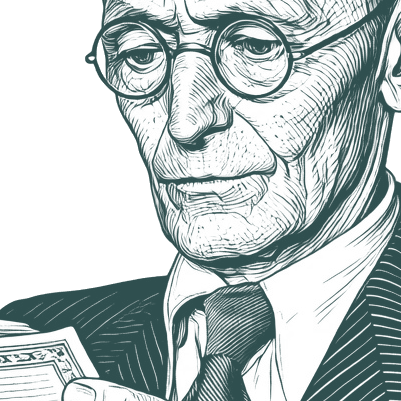
He thought the fear of death was perhaps the root of all art, perhaps also of all things of the mind. We fear death, we shudder at life's instability… - Hermann Hesse
""
He thought the fear of death was perhaps the root of all art, perhaps also of all things of the mind. We fear death, we shudder at life's instability, we grieve to see the flowers wilt again and again, and the leaves fall, and in our hearts we know that we, too, as transitory and will soon disappear. When artists create pictures and thinkers search for laws and formulate thoughts, it is in order to salvage something from the great dance of death, to make something that lasts longer than we do.
Hermann Karl Hesse (2 July 1877 – 9 August 1962) was a German-Swiss poet, novelist, and painter. In 1946, he received the Nobel Prize in Literature. His most famous works include Steppenwolf, Siddhartha, and The Glass Bead Game (also known as Magister Ludi) all of which explore an individual's search for spirituality.
Now they had to study just as stringently and methodically as the engineers and technicians of the past, if not more so. They had a steep path to climb, had to purify and strengthen their minds by dint of mathematics and scholastic exercises in Aristotelian philosophy. Moreover, they had to learn to renounce all those benefits which previous generations of scholars had considered worth striving for: rapid and easy money-making, celebrity and public honors, the homage of the newspapers, marriages with daughters of bankers and industrialists, a pampered and luxurious style of life.
"No road will bring us together."
"Don't speak like that."
"I'm serious. We are not meant to come together, not any more than sun and moon were meant to come together, or sea and land. We are sun and moon, dear friend; we are sea and land. It is not our purpose to become each other; it is to recognize each other, to learn to see the other and honor him for what he is: each the other's opposite and complement."
Go Premium
Support Quotewise while enjoying an ad-free experience and premium features.
I began to understand that suffering and disappointments and melancholy are there not to vex us or cheapen us or deprive us of our dignity but to mature and transfigure us.