True ease in writing comes from art, not chance,
As those move easiest who have learn'd to dance.
'Tis not enough no harshness gives offence,
The sou… - Alexander Pope
""
True ease in writing comes from art, not chance, As those move easiest who have learn'd to dance. 'Tis not enough no harshness gives offence, The sound must seem an echo to the sense. Soft is the strain when Zephyr gently blows, And the smooth stream in smoother numbers flows; But when loud surges lash the sounding shore, The hoarse, rough verse should like the torrent roar. When Ajax strives some rock's vast weight to throw, The line too labours, and the words move slow; Not so, when swift Camilla scours the plain, Flies o'er th' unbending corn, and skims along the main. Hear how Timotheus' varied lays surprise, And bid alternate passions fall and rise! While, at each change, the son of Libyan Jove Now burns with glory, and then melts with love; Now his fierce eyes with sparkling fury glow, Now sighs steal out, and tears begin to flow: Persians and Greeks like turns of nature found, And the world's victor stood subdu'd by sound! The pow'r of music all our hearts allow, And what Timotheus was, is Dryden now.
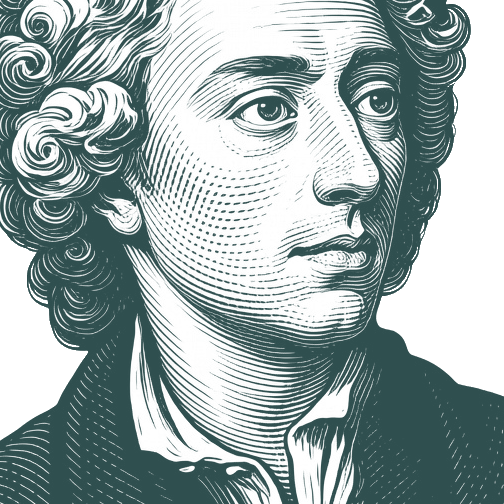
Alexander Pope (21 May 1688 – 30 May 1744) was a poet and satirist of the Augustan period and one of its greatest artistic exponents. Considered the foremost English poet of the early 18th century and a master of the heroic couplet, he is best known for satirical and discursive poetry.
Biography information from
Wikiquote·
Portrait adapted from
Wikimedia Commons, Michael Dahl (Public domain / CC0)
Also Known As
Alternative Names:
Pope the Poet
•
Alexander I Pope
•
Alexander, I Pope
And while self-love each jealous writer rules, Contending wits become the sport of fools: But still the worst with most regret commend, For each ill author is as bad a friend. To what base ends, and by what abject ways, Are mortals urg'd through sacred lust of praise! Ah ne'er so dire a thirst of glory boast, Nor in the critic let the man be lost! Good nature and good sense must ever join; To err is human; to forgive, divine.
Some valuing those of their own side or mind, Still make themselves the measure of mankind: Fondly we think we honor merit then, When we but praise ourselves in other men.
PREMIUM FEATURE
Advanced Search Filters
Filter search results by source, date, and more with our premium search tools.