Anyway, during the discussion, I used the Indian word “tamasic” rather than the English equivalent “deluded” and “slothful”.... Falling back on the n… - Koenraad Elst
""
Anyway, during the discussion, I used the Indian word “tamasic” rather than the English equivalent “deluded” and “slothful”.... Falling back on the nationalist paradigm makes Hindus misunderstand issues. It is of course far easier to separate people by skin colour than by ideology, very appealing to the lazy, tamasic mind. But it is sure to make you mistake enemies for friends, and friends for enemies. If you think you can afford that on a battlefield, suit yourselves.
English
Collect this quote
About
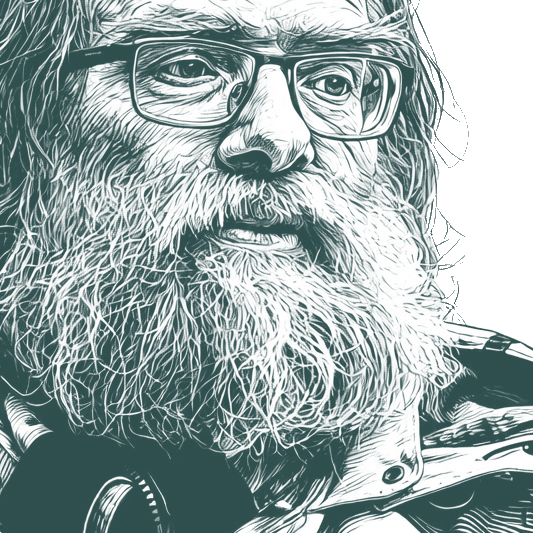
Koenraad Elst
Koenraad Elst (born 7 August 1959) is a Flemish right wing Hindutva author, known primarily for his support of the Out of India theory and the Hindutva movement. Scholars have accused him of harboring Islamophobia.
A Hindu-friendly India-watcher of the Foreign Broadcast Information Service, a parastatal world-watch bureau in Washington DC, has remarked that this alleged semitization, which is but a pejorative synonym for self-organization, may simply be necessary for Hinduism's survival. He points out that in Africa, the traditional religions are fast being replaced by Christianity and Islam precisely because they have no organization which can prepare a strategy of self-defence. African traditionalists are not denounced as 'semitized fundamentalists' because in effect, they submit to the liquidation of their tradition by mass conversions....It is hard to find fault with this observation.... Consider: why was the Roman Empire christianized, but not the Persian Empire? ...the difference was precisely that the Roman state religion was not 'semitized', while the Persian state religion was. The Roman state religion was pluralistic and didn't have much of a policy, while the Mazdean state religion in Persia did organize the opposition against Christian proselytization, mobilizing both the state and the population, and developing a combative 'Semitic' character in the process (the Mazdean oppression of Christianity led to the migration of some Syrian Christians to Kerala in the 4th century, where they survive till today). ... Ram Swarup analyzes the political intention behind laudatory labels like 'tolerant' and hate labels like 'Semitic'. He too points to Africa as an instance of what to avoid: 'The African continent has been under the attack of the two monolatrous religions, Christianity and Islam, for centuries. Under this attack, it has already lost much of its old culture. .... Some time ago, there was an article in the London Economist praising it for taking this attack with such pagan tolerance...' This praise of religions which submit to being annihilated ('tolerant') and the concomitant opprobrium for religions which don't, indeed the condemnation of the very will to survive as 'fanatical', is reminiscent of a French saying: 'This animal is very mean: it defends itself when attacked.'
In India, and increasingly also in the West and in international institutions, we are faced with a similar phenomenon, viz. Jihad negationism. This is the denial of aggression and atrocities motivated by Islam. Among the differences, we note those in social position of the deniers and those in the contents of the denial. Jihad deniers are not marginals who have sacrificed a career to their convictions, on the contrary; they serve their careers greatly by uttering the politically palatable “truth”. In India, any zero can become a celebrity overnight by publishing a condemnation of the “communalists” and taking a stand for Jihad denial and history distortion. The universities are full of them, while people who stand by genuine history are kept out. Like Jawaharlal Nehru, most of these negationists hold forth on the higher humbug (as historian Paul Johnson observed) and declare themselves “secular”.
Enhance Your Quote Experience
Enjoy ad-free browsing, unlimited collections, and advanced search features with Premium.
But Marxism has conditioned the Indian history discourse, even through many who would reject the “Marxist” label for themselves. It will take time to undo its influence.