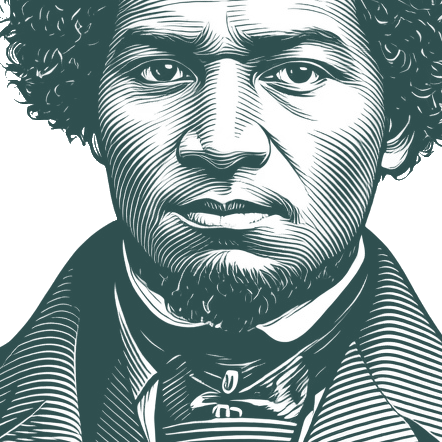
I admit the charge, but deny that nature, race, or color has anything to do with the fact. Any other race, with the same antecedents and the same con… - Frederick Douglass
""
I admit the charge, but deny that nature, race, or color has anything to do with the fact. Any other race, with the same antecedents and the same conditions, would show a similar thieving propensity. The American people have this lesson to learn, that where justice is denied, where poverty is enforced, where ignorance prevails, and where any one class is made to feel that society is an organized conspiracy to oppress, rob, and degrade them, neither persons nor property would be safe... While I hold now, as I held years ago, that the South is the natural home of the colored race, and that there must the destiny of that race be mainly worked out, I still believe that means can be and ought to be adopted, to assist in the emigration of such of their number as may wish to change their residence to parts of the country, where their civil and political rights are better protected than at present they can be at the South... The Republican party is not perfect; it is cautious even to the point of timidity; but it is the best friend we have.
English
Collect this quote
About
Frederick Douglass
Frederick Douglass (c. February 1818 – 20 February 1895) was an American abolitionist, orator, author, editor, reformer, women's rights advocate, and statesman during the American Civil War. He was born a slave in Maryland, as Frederick Augustus Washington Bailey.
Biography information from
Wikiquote·
Portrait adapted from
Wikimedia Commons, Engraved by J.C. Buttre from a daguerreotype. (Public domain / CC0)
Also Known As
Birth Name:
Frederick Augustus Washington Bailey
Alternative Names:
Frederick Augustus Washington Baly
•
Fred Bailey
•
Freddie Bailey
Related quotes. More quotes will automatically load as you scroll down, or you can use the load more buttons.
Shorter versions of this quote
Where justice is denied, where poverty is enforced, where ignorance prevails, and where any one class is made to feel that society is an organized conspiracy to oppress, rob and degrade them, neither persons nor property will be safe.
A man is worked upon by what he works on. He may carve out his circumstances, but his circumstances will carve him out as well.
There was a time when even brave men might look fearfully upon the destiny of the Republic; when our country was involved in a tangled network of contradictions; when vast and irreconcilable social forces fiercely disputed for ascendency and control; when a heavy curse rested upon our very soil, defying alike the wisdom and the virtue of the people to remove it; when our professions were loudly mocked by our practice, and our name was a reproach and a byword to a mocking; when our good ship of state, freighted with the best hopes of the oppressed of all nations, was furiously hurled against the hard and flinty rocks of derision, and every cord, bolt, beam and bend in her body quivered beneath the shock, there was some apology for doubt and despair. But that day has happily passed away. The storm has been weathered, and the portents are nearly all in our favor.
Fellow citizens, in what we have said and done today, and in what we may say and do hereafter, we disclaim everything like arrogance and assumption. We claim for ourselves no superior devotion to the character, history, and memory of the illustrious name whose monument we have here dedicated today. We fully comprehend the relation of Abraham Lincoln both to ourselves and to the white people of the United States. Truth is proper and beautiful at all times and in all places, and it is never more proper and beautiful in any case than when speaking of a great public man whose example is likely to be commended for honor and imitation long after his departure to the solemn shades, the silent continents of eternity. It must be admitted, truth compels me to admit, even here in the presence of the monument we have erected to his memory, Abraham Lincoln was not, in the fullest sense of the word, either our man or our model. In his interests, in his associations, in his habits of thought, and in his prejudices, he was a white man. He was preeminently the white man’s President, entirely devoted to the welfare of white men. He was ready and willing at any time during the first years of his administration to deny, postpone, and sacrifice the rights of humanity in the colored people to promote the welfare of the white people of this country. In all his education and feeling he was an American of the Americans. He came into the Presidential chair upon one principle alone, namely, opposition to the extension of slavery. His arguments in furtherance of this policy had their motive and main-spring in his patriotic devotion to the interests of his own race. To protect, defend, and perpetuate slavery in the states where it existed Abraham Lincoln was not less ready than any other President to draw the sword of the nation. He was ready to execute all the supposed guarantees of the United States Constitution in favor of the slave system anywhere inside the slave states. He was willing to pursue, recapture, and send back the fugitive slave to his master, and to suppress a slave rising for liberty, though his guilty master were already in arms against the government. The race to which we belong were not the special objects of his consideration. Knowing this, I concede to you, my white fellow-citizens, a pre-eminence in this worship at once full and supreme. First, midst, and last, you and yours were the objects of his deepest affection and his most earnest solicitude. You are the children of Abraham Lincoln. We are at best only his step-children; children by adoption, children by forces of circumstances and necessity. To you it especially belongs to sound his praises, to preserve and perpetuate his memory, to multiply his statues, to hang his pictures high upon your walls, and commend his example, for to you he was a great and glorious friend and benefactor. Instead of supplanting you at his altar, we would exhort you to build high his monuments; let them be of the most costly material, of the most cunning workmanship; let their forms be symmetrical, beautiful, and perfect, let their bases be upon solid rocks, and their summits lean against the unchanging blue, overhanging sky, and let them endure forever! But while in the abundance of your wealth, and in the fullness of your just and patriotic devotion, you do all this, we entreat you to despise not the humble offering we this day unveil to view; for while Abraham Lincoln saved for you a country, he delivered us from a bondage, according to Jefferson, one hour of which was worse than ages of the oppression your fathers rose in rebellion to oppose.