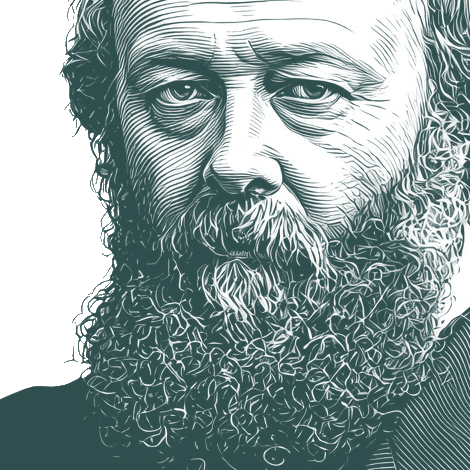
Much has been said in the present debate about conciliation and the value of conciliatory measures to Ireland...Conciliatory legislation is infinitel… - Robert Gascoyne-Cecil, 3rd Marquess of Salisbury
""
Much has been said in the present debate about conciliation and the value of conciliatory measures to Ireland...Conciliatory legislation is infinitely superior; but it depends for its efficacy on the circumstances under which it is used, and on the manner in which it is applied. Deterrent legislation, if vigorous and strong, at least deters, whatever the value of that process may be. But conciliatory legislation only conciliates where there is a full belief on the part of those with whom you are dealing that you are acting on a principle of justice, and not that you are acting on motives of fear. Where there is a suspicion or a strong belief that your conciliatory measures have been extorted from you by the violence which they are meant to put a stop to, all the value of that conciliation is taken away.
About
Robert Gascoyne-Cecil, 3rd Marquess of Salisbury
Robert Arthur Talbot Gascoyne-Cecil, 3rd Marquess of Salisbury (3 February 1830 – 22 August 1903), styled Lord Robert Cecil before the death of his elder brother in 1865, and Viscount Cranborne from June 1865 until his father died in April 1868, was a three-time Prime Minister of the United Kingdom, during 1885–1886, 1886–1892 and 1895–1902.
Native Name:
Robert Gascoyne-Cecil, 3. Marquess of Salisbury
Alternative Names:
Robert Gascoyne-Cecil
•
Robert Arthur Talbot Gascoyne-Cecil
•
Robert Arthur Talbot Gascoyne-Cecil, 3rd Marquess of Salisbury
•
Robert Arthur Talbot Gascoigne Cecil, Marquis of Salisbury
Additional quotes by Robert Gascoyne-Cecil, 3rd Marquess of Salisbury
First-rate men will not canvass mobs; and if they did, the mobs would not elect the first-rate men.
As a rule I think that wherever communities are in close geographical proximity, and are related to each other by an identity or a close similarity of language, one of two things must happen to them. Either they must combine absolutely or they must separate absolutely. (Hear, hear.) I do not believe that there is an instance of any permanent solution, any permanent settlement, involving an imperfect and an incomplete subordination. The reason is very obvious, that the smaller nation becomes the basis of operations for the enemy of the larger nation, whether they are enemies from abroad or at home. ... We have seen this kingdom gradually made up, first by the Heptarchy, then Wales, then Scotland, then Ireland. ... The force of circumstances has dictated to those communities the decree that they shall be one (cheers), and if you glance over the history of Ireland you at once see why they must be one. You see a succession of the enemies of England always using her as their opportunity (hear, hear), first from the Yorkists and Perkin Warbeck, then from the times of the Reformation and Philip II, then to the rebellion because of the Puritan movement in England, then to Louis XIV, and, later on, to the Jacobites. ... It was always the same thing. Was there any period or any nation that desired to fight another at home or abroad, they always selected Ireland as the basis of their operations; and unless your fame is absolutely erased, unless your energies have gone, unless your lamp among nations is put out, you may depend upon it that whatever sentiments are dominant now...you will come in the long run to the determination that consolidation, and consolidation alone, is the remedy for the evils under which Ireland suffers. (Cheers.)
PREMIUM FEATURE
Advanced Search Filters
Filter search results by source, date, and more with our premium search tools.
Constitutional institutions are splendid things, but whoever heard of any nation which was purely Mahomedan being able to enjoy them. A constitution depends upon the character of the people to whom it is applied, and there is no circumstance which influences those people more than the religion which they profess, and I will venture to say that there is no instance in the history of the world of any purely Mahomedan, or mainly Mahomedan, population flourishing under what we call popular institutions.