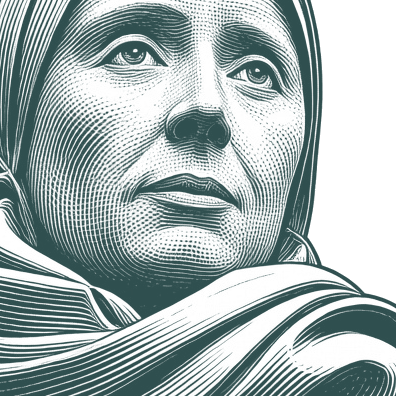
We have, now, matter of mourning: for our sin is cause of Christ's pains; and we have, lastingly, matter of joy: for endless love made Him to suffer.… - Julian of Norwich
""
We have, now, matter of mourning: for our sin is cause of Christ's pains; and we have, lastingly, matter of joy: for endless love made Him to suffer. And therefore the creature that seeth and feeleth the working of love by grace, hateth nought but sin: for of all things, to my sight, love and hate are hardest and most unmeasureable contraries. And notwithstanding all this, I saw and understood in our Lord's meaning that we may not in this life keep us from sin as wholly in full cleanness as we shall be in Heaven. But we may well by grace keep us from the sins which would lead us to endless pains, as Holy Church teacheth us; and eschew venial reasonably up to our might. And if we by our blindness and our wretchedness any time fall, we should readily rise, knowing the sweet touching of grace, and with all our will amend us upon the teaching of Holy Church, according as the sin is grievous, and go forthwith to God in love; and neither, on the one side, fall over low, inclining to despair, nor, on the other side, be over-reckless, as if we made no matter of it ; but nakedly acknowledge our feebleness, finding that we may not stand a twinkling of an eye but by Keeping of grace, and reverently cleave to God, on Him only trusting. For after one wise is the Beholding by God, and after another wise is the Beholding by man. For it belongeth to man meekly to accuse himself, and it belongeth to the proper Goodness of our Lord God courteously to excuse man.
Julian of Norwich (c. 8 November 1342 – c. 1416) was an English Christian mystic and theologian. Little is known of her life. Even her name is uncertain, the name "Julian" probably originated from the Church of St. Julian, Norwich, where she was an anchoress.
Biography information from
Wikiquote·
Portrait adapted from
Wikimedia Commons, Poliphilo (Public domain / CC0)
Also Known As
Alternative Names:
Juliana of Norwich
•
St. Julian of Norwich
•
St. Juliana of Norwich
•
Juliana
For in every soul that shall be saved is a Godly Will that never assented to sin, nor ever shall.
For as the body is clad in the cloth, and the flesh in the skin, and the bones in the flesh, and the heart in the whole, so are we, soul and body, clad in the Goodness of God, and enclosed. Yea, and more homely: for all these may waste and wear away, but the Goodness of God is ever whole; and more near to us, without any likeness; for truly our Lover desireth that our soul cleave to Him with all its might, and that we be evermore cleaving to His Goodness. For of all things that heart may think, this pleaseth most God, and soonest speedeth [the soul]. For our soul is so specially loved of Him that is highest, that it overpasseth the knowing of all creatures: that is to say, there is no creature that is made that may [fully] know how much and how sweetly and how tenderly our Maker loveth us. And therefore we may with grace and His help stand in spiritual beholding, with everlasting marvel of this high, overpassing, inestimable Love that Almighty God hath to us of His Goodness. And therefore we may ask of our Lover with reverence all that we will.
PREMIUM FEATURE
Advanced Search Filters
Filter search results by source, date, and more with our premium search tools.
Fair and sweet is our Heavenly Mother in the sight of our souls; precious and lovely are the Gracious Children in the sight of our Heavenly Mother, with mildness and meekness, and all the fair virtues that belong to children in Nature. For of nature the Child despaireth not of the Mother's love, of nature the Child presumeth not of itself, of nature the Child loveth the Mother and each one of the other. These are the fair virtues, with all other that be like, wherewith our Heavenly Mother is served and pleased.