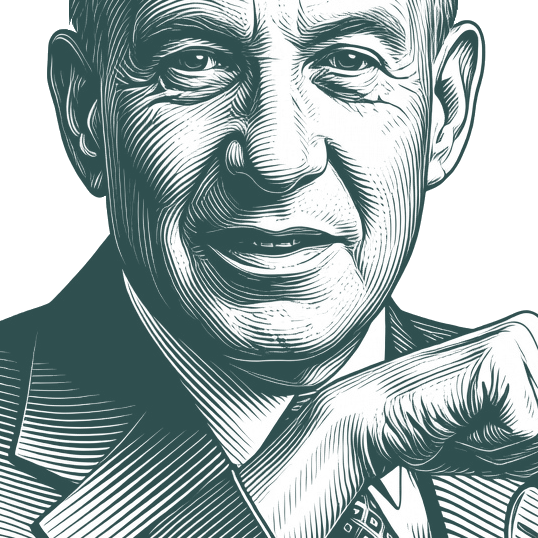
functional design, where it applies, makes the least psychological demands on the people. They are highly secure both in their work and in their rela… - Peter Drucker
""
functional design, where it applies, makes the least psychological demands on the people. They are highly secure both in their work and in their relationships. When it, however, is being used beyond fairly narrow limits of size and complexity it creates emotional tensions, hostilities, and insecurities. People will then tend to see themselves and their functions belittled, besieged, attacked. They will come to see it as their first job to defend their function, to protect it against marauders in other functions, to make sure “it doesn’t get pushed around.
English
Collect this quote
About
Peter Drucker
Peter Ferdinand Drucker (November 19 1909 – November 11 2005) was an Austrian-born American writer, management consultant and university professor. In 1943 he became a naturalized citizen of the United States. He taught at New York University and Claremont Graduate University respectively.
The executive’s time tends to belong to everybody else. If one attempted to define an “executive” operationally (that is, through his activities) one would have to define him as a captive of the organization. Everybody can move in on his time, and everybody does. There seems to be very little any one executive can do about it. He cannot, as a rule, like the physician, stick his head out the door and say to the nurse, “I won’t see anybody for the next half hour.” Just at this moment, the executive’s telephone rings, and he has to speak to the company’s best customer or to a high official in the city administration or to his boss — and the next half hour is already gone.*
"The leaders who work most effectively, it seems to me, never say "I." And that's not because they have trained themselves not to say "I." They don't think "I." They think "we"; they think "team." They understand their job to be to make the team function. They accept responsibility and don't sidestep it, but "we" gets the credit. This is what creates trust, what enables you to get the task done."
One cannot hire a hand; the whole man always comes with it.