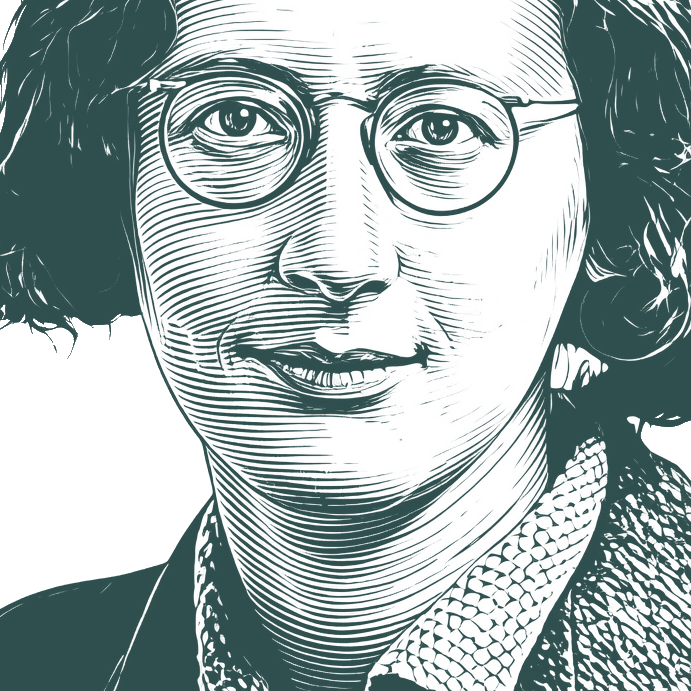
Anyone whose attention and love are really directed towards the reality outside the world recognizes at the same time that he is bound, both in publi… - Simone Weil
""
Anyone whose attention and love are really directed towards the reality outside the world recognizes at the same time that he is bound, both in public and private life, by the single and permanent obligation to remedy, according to his responsibilities and to the extent of his power, all the privations of soul and body which are liable to destroy or damage the earthly life of any human being whatsoever. This obligation cannot legitimately be held to be limited by the insufficiency of power or the nature of the responsibilities until everything possible has been done to explain the necessity of the limitation to those who will suffer by it; the explanation must be completely truthful and must be such as to make it possible for them to acknowledge the necessity. No combination of circumstances ever cancels this obligation. If there are circumstances which seem to cancel it as regards a certain man or category of men, they impose it in fact all the more imperatively. The thought of this obligation is present to all men, but in very different forms and in very varying degrees of clarity. Some men are more and some are less inclined to accept — or to refuse — it as their rule of conduct.
Simone Adolphine Weil (3 February 1909 – 24 August 1943) was a French social and religious philosopher, and Christian mystic. Politically active, during the Spanish Civil War she joined the Anarchist military unit known as the Durruti Column, and took part in the French Resistance during World War II. She was the sister of mathematician André Weil, with whom she shared an interest in ancient Greek and Indian thought.
A modern factory reaches perhaps almost the limit of horror. Everybody in it is constantly harassed and kept on edge by the interference of extraneous wills while the soul is left in cold and desolate misery. What man needs is silence and warmth; what he is given is an icy pandemonium. Physical labour may be painful, but it is not degrading as such. It is not art; it is not science; it is something else, possessing an exactly equal value with art and science, for it provides an equal opportunity to reach the impersonal stage of attention.
Liberty, taking the word in its concrete sense, consists in the ability to choose.
PREMIUM FEATURE
Advanced Search Filters
Filter search results by source, date, and more with our premium search tools.