If it is good to know how to deal with men as they are, it is much better to make them what there is need that they should be. <b>The most absolute a… - Jean-Jacques Rousseau
""
If it is good to know how to deal with men as they are, it is much better to make them what there is need that they should be. The most absolute authority is that which penetrates into a man's inmost being, and concerns itself no less with his will than with his actions. It is certain that all peoples become in the long run what the government makes them; warriors, citizens, men, when it so pleases: or merely populace and rabble, when it chooses to make them so. Hence every prince who despises his subjects, dishonours himself, in confessing that he does not know how to make them worthy of respect. Make men, therefore, if you would command men: if you would have them obedient to the laws, make them love the laws, and then they will need only to know what is their duty to do it. This was the great art of ancient governments, in those distant times when philosophers gave laws to men, and made use of their authority only to render them wise and happy. Thence arose the numerous sumptuary laws, the many regulations of morals, and all the public rules of conduct which were admitted or rejected with the greatest care. Even tyrants did not forget this important part of administration, but took as great pains to corrupt the morals of their slaves, as Magistrates took to correct those of their fellowcitizens. But our modern governments, which imagine they have done everything when they have raised money, conceive that it is unnecessary and even impossible to go a step further.
Jean-Jacques Rousseau (June 28, 1712 – July 2, 1778) was a major French-speaking Genevan philosopher of Enlightenment whose political ideas influenced the French Revolution, the development of socialist theory, and the growth of nationalism.
Biography information from
Wikiquote·
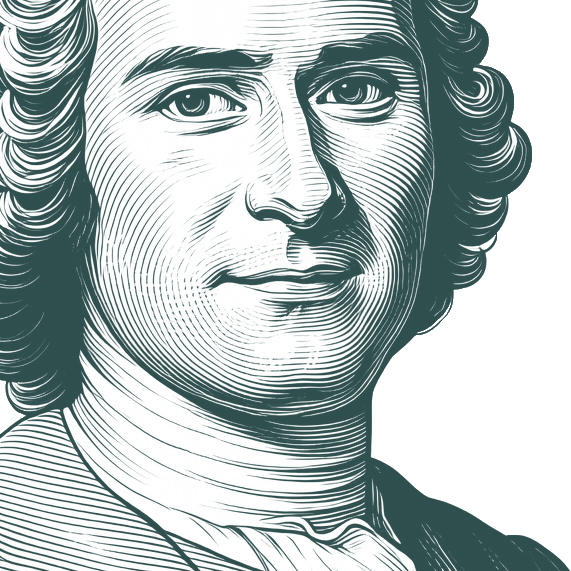
Portrait adapted from
Wikimedia Commons, Maurice Quentin de La Tour (Public domain / CC0)
Also Known As
Alternative Names:
Citizen of Geneva
•
Jean Jacques Rousseau
•
J. J. Rousseau
•
Rousseau
•
J.J. Rousseau
•
JJ Rousseau
It is a mistake to classify the passions as lawful and unlawful, so as to yield to the one and refuse the other. All alike are good if we are their masters; all alike are bad if we abandon ourselves to them. Nature forbids us to extend our relations beyond the limits of our strength; reason forbids us to want what we cannot get, conscience forbids us, not to be tempted, but to yield to temptation. To feel or not to feel a passion is beyond our control, but we can control ourselves. Every sentiment under our own control is lawful; those which control us are criminal. A man is not guilty if he loves his neighbour's wife, provided he keeps this unhappy passion under the control of the law of duty; he is guilty if he loves his own wife so greatly as to sacrifice everything to that love.
Under bad governments, equality is only apparent and illusory: it serves to only keep the pauper in his poverty and the rich man in the position he has usurped.
Works in ChatGPT, Claude, or Any AI
Add semantic quote search to your AI assistant via MCP. One command setup.
Bir devletin yapısı ne zaman gerçekten sağlam ve sürekli olur? Törelere gerektiği gibi uyulduğu zaman. Törelere uyulunca da, doğal ilişkilerle yasalar hep aynı noktalarda uzlaşma durumundadırlar.” “Özgürce yapılan her iş iki etkenden doğar. Biri ruhsal etken, yani işi belirleyen, tanımlayan istem; diğeri maddesel etken, yani işi gerçekleştiren güç. İsteme yasama gücü, güce de yürütme gücü denir. Bunların ikisi birleşmedikçe politik bütünde hiçbir şey yapılamaz. Yasama gücü halkın elindedir. Yürütme gücü, yasacı yada egemen varlık niteliği ile çoğunluğun elinde olamaz. Çünkü bu güç yalnız özel davranışlara dayanır ve yasanın yetkisine girmediği gibi, egemen varlığın yetkisine de girmez, çünkü onun işlemleri yasadan başka bir şey değildir.” “Hükümet egemen varlığın sadece aracıdır. Yurttaşlarla egemen varlığın karşılıklı ilişkilerini sağlamak amacıyla kurulmuş, gerek yasaları yürütmek, gerekse politik ve toplumsal özgürlükleri sürdürmekle görevli, aracı bir bütündür. Egemen varlığın birer görevlisi olan yöneticiler, yine onun adına devlet gücünü kullanırlar. Egemen varlık bu yetkiyi sınırlayabilir, değişiklik yapabilir ve dilediği zamanda geriye alabilir. Egemen varlık yönetmeye, yönetici yasamaya, yurttaşlar da yasayı hiçe saymaya kalkıştılar mı düzen yerini karışıklığa bırakır. Devlet kendiliğinden, hükümetse ancak egemen varlıkla birlikte vardır.” “Halkın nüfusu ne kadar çoksa, egemen varlığın uyruklarına olan ilişkisi o kadar artar. Yöneticiler ne kadar çok olursa, hükümet o kadar güçsüz olur. Her yöneticinin hemen her zaman bir yönetim görevi vardır. Oysa her yurttaş kendi başına hiçbir egemenlik görevi yapamaz.” “Egemen varlık yönetim görevini bütün halka yada halkın büyük bir bölümüne bırakabilir, yönetici yurttaşların sayısı öbür yurttaşların sayısını aşar DEMOKRASİ “ “Egemen varlık yönetim işini bir azınlığın eline bırakabilir, yurttaş sayısı yönetici sayısından çok olur ARİSTOKRASİ” “Egemen varlık yönetimi tek bir yöneticinin eline bırakır, bütün görevliler