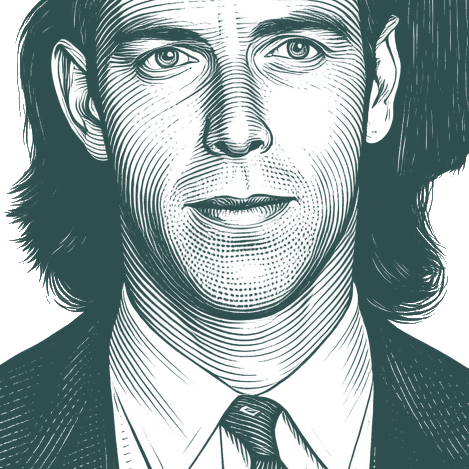
[W]hen our love for others is based simply on mutual need it becomes strangling - a kind of vampirism in which we say, all too expressively, 'I love … - Alan Watts
""
[W]hen our love for others is based simply on mutual need it becomes strangling - a kind of vampirism in which we say, all too expressively, 'I love you so much I could eat you!' It is from such desiring that parental devotion becomes smother-love and marriage holy deadlock.
Alan Wilson Watts (6 January 1915 – 16 November 1973) was an English philosopher, writer, speaker, and expert in comparative religion.
Biography information from
Wikiquote·
Portrait adapted from
Wikimedia Commons, The University of Vermont Alumni Magazine vol. 39 no. 01, p. 22. (Public domain / CC0)
Also Known As
Alternative Names:
Alan Wilson Watts
•
Alan W. Watts
Portrait from Wikimedia Commons. Credit: The University of Vermont Alumni Magazine vol. 39 no. 01, p. 22.. Used under Public domain / CC0. Processed and styled by Quotewise.
Enhance Your Quote Experience
Enjoy ad-free browsing, unlimited collections, and advanced search features with Premium.
Out of Mind spring in-numerable things, conditioned by discrimination (i.e., classification) and habit-energy; these things people accept as an external world.…
There may be wrong actions in the sense of actions contrary to the rules of human communication. But the way you feel towards other people: loving, hating, et cetera, et cetera; there aren’t any wrong feelings.
And so, to try and force one’s feelings to be other than what they are is absurd. And furthermore: dishonest.
But you see: the idea that there are no wrong feelings is an immensely threatening one to people who are afraid to feel.
This is one of the peculiar problems of our culture: we are terrified of our feelings. We think that if we give them any scope and if we don’t immediately beat them down, they will lead us down into all kinds of chaotic and destructive actions.
But if, for a change, we would allow our feelings and look upon their comings and goings as something as beautiful and necessary as changes in the weather, the going of night and day and the four seasons, we would be at peace with ourselves.
Go Premium
Support Quotewise while enjoying an ad-free experience and premium features.
All this will involve a curious reversal of the Protestant ethic, which, at least in the United States, is one of the big obstacles to a future of wealth and leisure for all. The Devil, it is said, finds work for idle hands to do, and human energy cannot be trusted unless most of it is absorbed in hard, productive work — so that, on coming home, we are too tired to get into mischief. It is feared that affluence plus leisure will, as in times past, lead to routs and orgies and all the perversities that flow therefrom, and then on to satiation, debilitation, and decay — as in Hogarth's depiction of A Rake's Progress.