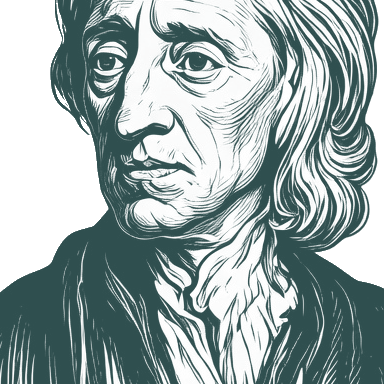
The acts of the mind, wherein it exerts its power over simple ideas, are chiefly these three: 1. Combining several simple ideas into one compound one… - John Locke
""
The acts of the mind, wherein it exerts its power over simple ideas, are chiefly these three: 1. Combining several simple ideas into one compound one, and thus all complex ideas are made. 2. The second is bringing two ideas, whether simple or complex, together, and setting them by one another so as to take a view of them at once, without uniting them into one, by which it gets all its ideas of relations. 3. The third is separating them from all other ideas that accompany them in their real existence: this is called abstraction, and thus all its general ideas are made.
John Locke (29 August 1632 – 28 October 1704) was an influential English philosopher and social contract theorist. He developed an alternative to the Hobbesian state of nature and asserted a government could be good only if it received the consent of the governed and protected the natural rights of life, liberty, and estate. If such a consent was not achieved, Locke argued in favour of a right of rebellion, which he referred to as an "appeal to heaven".
Biography information from
Wikiquote·
Portrait adapted from
Wikimedia Commons, Godfrey Kneller (Public domain / CC0)
Popery so threatens and so nearly surrounds us...every sober man would think it seasonable at this time that all dissenting Protestants should be brought to a good understanding and compliance one with another...I think all Protestants ought now by all ways to be stirred up against them [Catholics] as People that have declared themselves ready by blood, violence, and destruction to ruine our Religion and Government...[they] are nothing but either Enemys in our bowells or spies among us, whilst their General commanders whom they blindly obey declare warr, and an unalterable designe to destroy us.