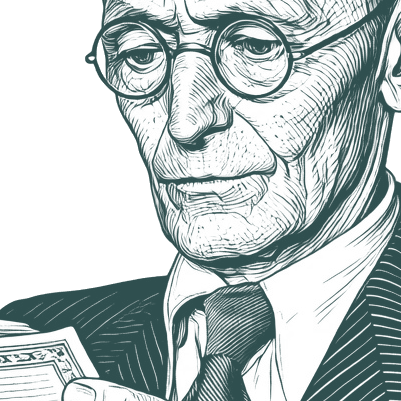
Hermann Karl Hesse (2 July 1877 – 9 August 1962) was a German-Swiss poet, novelist, and painter. In 1946, he received the Nobel Prize in Literature. His most famous works include Steppenwolf, Siddhartha, and The Glass Bead Game (also known as Magister Ludi) all of which explore an individual's search for spirituality.
An enlightened man had but one duty — to seek the way to himself, to reach inner certainty, to grope his way forward, no matter where it led. The realization shook me profoundly, it was the fruit of this experience. I had often speculated with images of the future, dreamed of roles that I might be assigned, perhaps as poet or prophet or painter, or something similar. All that was futile. I did not exist to write poems, to preach or to paint, neither I nor anyone else. All of that was incidental. Each man had only one genuine vocation — to find the way to himself. He might end up as poet or madman, as prophet or criminal — that was not his affair, ultimately it was of no concern. His task was to discover his own destiny — not an arbitrary one — and live it out wholly and resolutely within himself. Everything else was only a would-be existence, an attempt at evasion, a flight back to the ideals of the masses, conformity and fear of one's own inwardness.
How alien our country has become from her noblest Province and how unfaithful to that Province's spirit; how far body and soul, ideal and reality have moved apart in our country; how little they know about each other, or want to know.
PREMIUM FEATURE
Advanced Search Filters
Filter search results by source, date, and more with our premium search tools.
Man's life seems to me like a long, weary night that would be intolerable if there were not occasionally flashes of light, the sudden brightness of which is so comforting and wonderful, that the moments of their appearance cancel out and justify the years of darkness.