Whether we have happiness or not depends on the seeds in our consciousness. If our seeds of compassion, understanding, and love are strong, those qua… - Thích Nhất Hạnh

" "

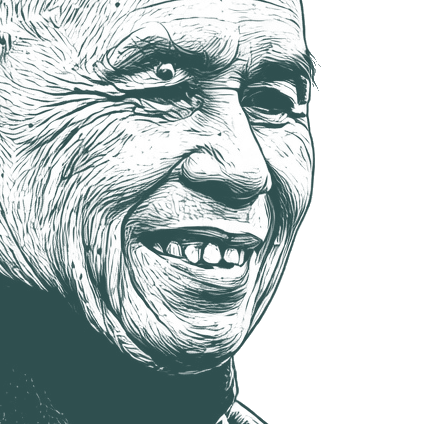
Whether we have happiness or not depends on the seeds in our consciousness. If our seeds of compassion, understanding, and love are strong, those qualities will be able to manifest in us. If the seeds of anger, hostility and sadness in us are strong, then we will experience much suffering. To understand someone, we have to be aware of the quality of the seeds in his consciousness. And we need to remember that his is not solely responsible for those seeds. His ancestors, parents, and society are co-responsible for the quality of the seeds in his consciousness. When we understand this, we are able to feel compassion for that person. With understanding and love, we will know how to water our own beautiful seeds and those of others, and we will recognize seeds of suffering and find ways to transform them.

English
Collect this quote

About Thích Nhất Hạnh

Thích Nhất Hạnh (born as Nguyễn Xuân Bảo; 11 October 1926 – 22 January 2022) was an expatriate Vietnamese Buddhist monk, peace activist, and prolific author in both Vietnamese and English. Nhất Hạnh is most commonly referred to as Thích Nhất Hạnh, in which the Vietnamese title Thích (釋), derived from "Thích Ca" or "Thích Già" (釋迦) and applied to all Vietnamese Buddhist monks and nuns, means "of the Shakya (Shakyamuni Buddha) clan".

Biography information from Wikiquote

Also Known As

Alternative Names: Nhat Hanh Nguyễn Đình Lang Nguyễn Xuân Bảo Trừng Quang Phùng Xuân Thầy Nhất Hạnh Thiền Sư Nhất Hạnh Thich Nhat Hanh
Go Premium

Support Quotewise while enjoying an ad-free experience and premium features.

View Plans

Related quotes. More quotes will automatically load as you scroll down, or you can use the load more buttons.

Additional quotes by Thích Nhất Hạnh

Fifteen years ago, a business manager from the United States came to Plum Village to visit me. His conscience was troubled because he was the head of a firm that designed atomic bombs. I listened as he expressed his concerns. I knew if I advised him to quit his job, another person would only replace him. If he were to quit, he might help himself, but he would not help his company, society, or country. I urged him to remain the director of his firm, to bring mindfulness into his daily work, and to use his position to communicate his concerns and doubts about the production of atomic bombs.

In the Sutra on Happiness, the Buddha says it is great fortune to have an occupation that allows us to be happy, to help others, and to generate compassion and understanding in this world. Those in the helping professions have occupations that give them this wonderful opportunity. Yet many social workers, physicians, and therapists work in a way that does not cultivate their compassion, instead doing their job only to earn money. If the bomb designer practises and does his work with mindfulness, his job can still nourish his compassion and in some way allow him to help others. He can still influence his government and fellow citizens by bringing greater awareness to the situation. He can give the whole nation an opportunity to question the necessity of bomb production.

Many people who are wealthy, powerful, and important in business, politics, and entertainment are not happy. They are seeking empty things - wealth, fame, power, sex - and in the process they are destroying themselves and those around them. In Plum Village, we have organised retreats for businesspeople. We see that they have many problems and suffer just as others do, sometimes even more. We see that their wealth allows them to live in comfortable conditions, yet they still suffer a great deal.

Some businesspeople, even those who have persuaded themselves that their work is very important, feel empty in their occu

"Breathing in, I calm my body." Reciting this line is like drinking a glass of ice water-you feel the cold, the freshness, permeate your body. When I breathe in and recite this line, I actually feel the breathing calming my body, calming my mind. "Breathing out, I smile." You know the effect of a smile. A smile can relax hundreds of muscles in your face, and relax your nervous system. A smile makes you master of yourself. That is why the Buddhas and bodhisattvas are always smiling. When you smile, you realize the wonder of the smile.

PREMIUM FEATURE
Advanced Search Filters

Filter search results by source, date, and more with our premium search tools.
The miracle is not to walk on water. The miracle is to walk on the green earth, dwelling deeply in the present moment and feeling truly alive.

Loading...