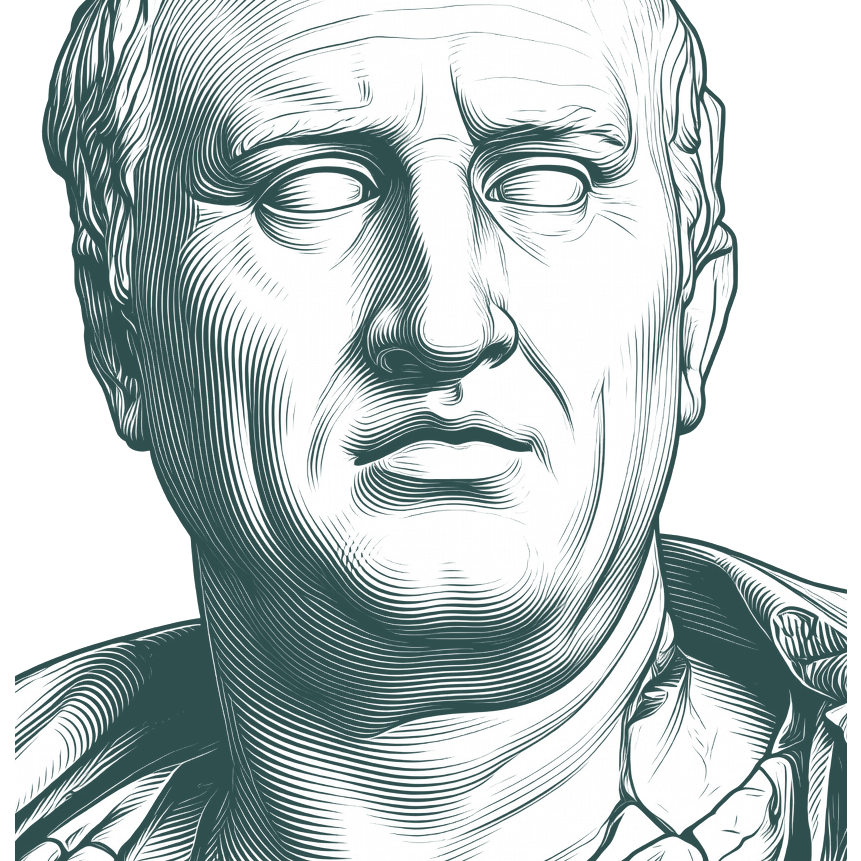
But when there is mutual fear between one individual and another, and between one class and another, then, because no one can rely on his own strengt… - Cicero
""
But when there is mutual fear between one individual and another, and between one class and another, then, because no one can rely on his own strength, a kind of pact is made between the people and the powerful few. From that emerges the compromise recommended by Scipio, i.e. the mixed form of government. You see, the mother of justice is not nature, nor good intentions, but weakness. For when one is faced with a threefold choice: (a) to do injury
Marcus Tullius Cicero (3 January 106 BC – 7 December 43 BC), infrequently known by the anglicized name Tully in the Middle Ages and after, was a Roman philosopher, politician, lawyer, orator, political theorist, consul and constitutionalist. He came from a wealthy municipal family of the Roman equestrian order, and is widely considered one of Rome's greatest orators and prose stylists.
Sed quo beneficio? quod me Brundisi non occideris?
It is the peculiar quality of a fool to perceive the faults of others and to forget his own.
Can you also, Lucullus, affirm that there is any power united with wisdom and prudence which has made, or, to use your own expression, manufactured man? What sort of a manufacture is that? Where is it exercised? when? why? how?