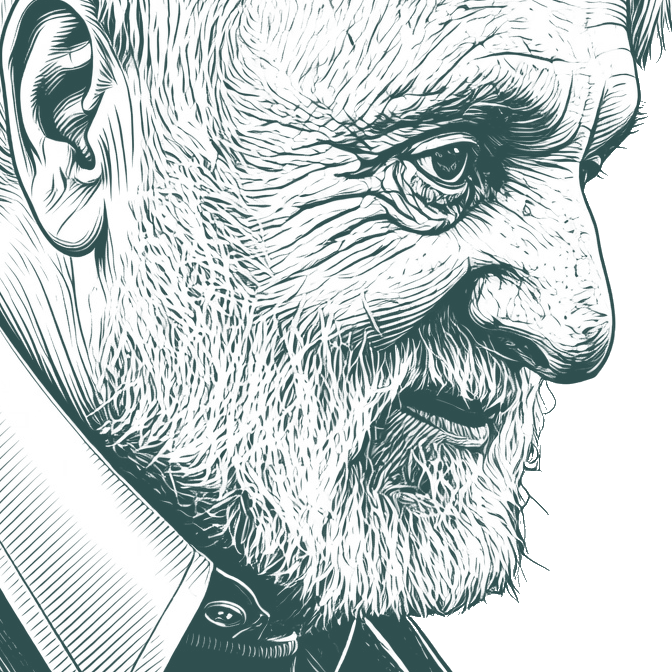
If you eliminate suffering from this world you eliminate life. There's no evolution. Those species that don't suffer don't survive. Sometimes the ins… - Robert M. Pirsig
""
If you eliminate suffering from this world you eliminate life. There's no evolution. Those species that don't suffer don't survive. Sometimes the insane and the contrarians and the ones who are the closest to suicide are the most valuable people society has. They may be the precursors of social change. They've taken the burdens of the culture onto themselves and in their struggle to solve their own problems they're solving problems for the culture as well
Robert Maynard Pirsig (6 September 1928 – 24 April 2017) was an American philosopher and novelist, most famous for his novel Zen and the Art of Motorcycle Maintenance in which he proposed what has become known as his Metaphysics of Quality (MoQ).
Biography information from
Wikiquote·
Portrait adapted from
Wikimedia Commons, Ian Glendinning, en:User:IanGlendinning (CC BY)
Also Known As
Alternative Names:
Robert Maynard Pirsig
•
Robert Pirsig
It's normal at this point for the fear-anger syndrome to take over and make you want to hammer on that side plate with a chisel, to pound it off with a sledge if necessary. You think about it, and the more you think about it the more you're inclined to take the whole machine to a high bridge and drop it off. It's just outrageous that a tiny little slot of a screw can defeat you so totally.
But to tear down a factory or to revolt against a government or to avoid repair of a motorcycle because it is a system is to attack effects rather than causes; and as long as the attack is upon effects only, no change is possible. The true system, the real system, is our present construction of systematic thought itself, rationality itself, and if a factory is torn down but the rationality which produced it is left standing, then that rationality will simply produce another factory. If a revolution destroys a systematic government, but the systematic patterns of thought that produced that government are left intact, then those patterns will repeat themselves in the succeeding government. There’s so much talk about the system. And so little understanding.
Works in ChatGPT, Claude, or Any AI
Add semantic quote search to your AI assistant via MCP. One command setup.