British American author and lecturer (1915–1973)
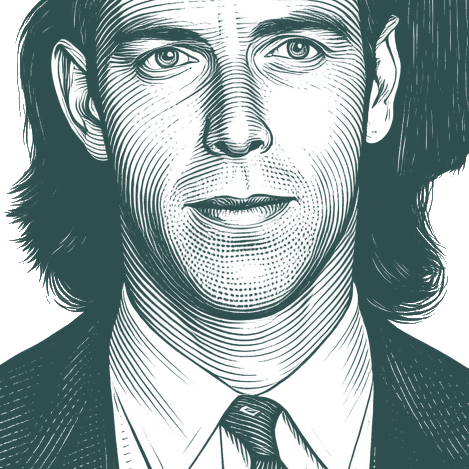
Alan Wilson Watts (6 January 1915 – 16 November 1973) was an English philosopher, writer, speaker, and expert in comparative religion.
Bio from: Wikiquote (CC BY-SA 4.0) · Portrait adapted from: Wikimedia Commons, The University of Vermont Alumni Magazine vol. 39 no. 01, p. 22. (Public domain / CC0)
From Wikidata (CC0)

Individual feelings about death are conditioned by social attitudes, and it is doubtful that there is any one natural and inborn emotion connected with dying. For example, it used to be thought that childbirth should be painful, as a punishment for Original Sin or for having had so much fun conceiving the baby. For God had said to Eve and all her daughters, “In sorrow thou shalt bring forth children.” Thus when everyone believed that in having a baby it was a woman’s duty to suffer, women did their duty, and many still do. We were much surprised, therefore, to find women in “primitive” societies who could just squat down and give birth while working in the fields, bite the umbilical cord, wrap up the baby, and go their way. It wasn’t that their women were tougher than ours, but just that they had a different attitude. For our own gynecologists have recently discovered that many women can be conditioned psychologically for natural and painless childbirth. The pains of labor are renamed “tensions,” and the mother-to-be is given preparatory exercises in relaxing to tension and cooperating with it. Birth, they are told, is not a sickness. One goes to a hospital just in case anything should go wrong, though many avant-garde gynecologists will let their patients give birth at home.
When you dig sound you realize that the flow or vibration of sound is a way in which you experience basic existence, being here. You can learn everything from sound, because it is not a constant. It comes and goes. It is on and off. You only hear it because it is vibrating. The lesson is that life is on and off, black and white, life and death, inside and outside, knowing and not knowing: they’re all vibrations. It’s easy to explain that in words, but to feel and understand it in your bones you have to learn how to listen to a sound. It was to teach that skill that this system of chanting sounds was invented.
Man is not to be an intellectual porcupine meeting his environment with a surface of spikes. Man meets the world outside with a soft skin, with a delicate eyeball and eardrum, and finds communion with it through a warm, melting, vaguely defined and caressing touch whereby the world is not set at a distance like an enemy to be shot, but embraced to become one flesh, like a beloved wife.
The natural world gives us many examples of the great effectiveness of this way. The Chinese philosophy of which judo itself is an expression — Taoism — drew attention to the power of water to overcome all obstacles by its gentleness and pliability. It showed how the supple willow survives the tough pine in a snowstorm, for whereas the unyielding branches of the pine accumulate snow until they crack, the springy boughs of the willow bend under its weight, drop the snow, and jump back again. If, when swimming, you are caught in a strong current, it is fatal to resist. You must swim with it and gradually edge to the side. One who falls from a height with stiff limbs will break them, but if he relaxes like a cat he will fall safely. A building without 'give' in its structure will easily collapse in storm or earthquake, and a car without the cushioning of tires and springs will soon come apart on the road. The mind has just the same powers, for it has give and can absorb shocks like water or a cushion. But this giving way to an opposing force is not at all the same thing as running away. A body of water does not run away when you push it; it simply gives at the point of the push and encloses your hand. A shock absorber does not fall down like a bowling-pin when struck; it gives, and yet stays in the same place. To run away is the only defense of something rigid against an overwhelming force. Therefore the good shock absorber has not only 'give,' but also stability or 'weight.
There is only this now. It does not come from anywhere; it is not going anywhere. It is not permanent, but it is not impermanent. Though moving, it is always still. When we try to catch it, it seems to run away, and yet it is always here and there is no escape from it. And when we turn around to find the self which knows this moment, we find that it has vanished like the past.
Advanced Search Filters
Filter search results by source, date, and more with our premium search tools.
Thus when the line between myself and what happens to me is dissolved and there is no stronghold left for an ego even as a passive witness, I find myself not in a world but as a world which is neither compulsive nor capricious. What happens is neither automatic nor arbitrary: it just happens, and all happenings are mutually interdependent in a way that seems unbelievably harmonious. Every this goes with every that. Without others there is no self, and without somewhere else there is no here, so that — in this sense — self is other and here is there.