Thus when the line between myself and what happens to me is dissolved and there is no stronghold left for an ego even as a passive witness, I find myself not in a world but as a world which is neither compulsive nor capricious. What happens is neither automatic nor arbitrary: it just happens, and all happenings are mutually interdependent in a way that seems unbelievably harmonious. Every this goes with every that. Without others there is no self, and without somewhere else there is no here, so that — in this sense — self is other and here is there.
British American author and lecturer (1915–1973)
Alan Wilson Watts (6 January 1915 – 16 November 1973) was an English philosopher, writer, speaker, and expert in comparative religion.
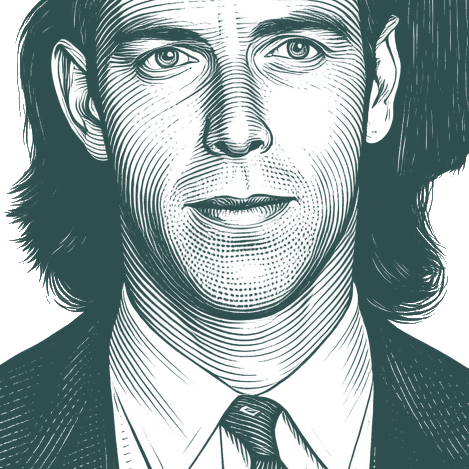
Bio from: Wikiquote (CC BY-SA 4.0) · Portrait adapted from: Wikimedia Commons, The University of Vermont Alumni Magazine vol. 39 no. 01, p. 22. (Public domain / CC0)
Alternative Names:
Alan Wilson Watts
•
Alan W. Watts
From Wikidata (CC0)

Showing quotes in randomized order to avoid selection bias. Click Popular for most popular quotes.
"As is so often the way, what we have suppressed and overlooked is
something startlingly obvious. The difficulty is that it is so obvious and
basic that one can hardly find the words for it. The Germans call it a
Hintergedanke, an apprehension lying tacitly in the back of our minds
which we cannot easily admit, even to ourselves. The sensation of "I" as
a lonely and isolated center of being is so powerful and
commonsensical, and so fundamental to our modes of speech and
thought, to our laws and social institutions, that we cannot experience
selfhood except as something superficial in the scheme of the universe. I
seem to be a brief light that flashes but once in all the aeons of time — a
rare, complicated, and all-too-delicate organism on the fringe of
biological evolution, where the wave of life bursts into individual,
sparkling, and multicolored drops that gleam for a moment only to
vanish forever. Under such conditioning it seems impossible and even
absurd to realize that myself does not reside in the drop alone, but in the
whole surge of energy which ranges from the galaxies to the nuclear
fields in my body. At this level of existence "I" am immeasurably old;
my forms are infinite and their comings and goings are simply the
pulses or vibrations of a single and eternal flow of energy."
We suffer from the delusion that the entire universe is held in order by the categories of human thought, fearing that if we do not hold to them with the utmost tenacity, everything will vanish into chaos.
We must repeat: memory, thought, language, and logic are essential to human life. They are one half of sanity. But a person, a society, which is only half sane is insane. To look at life without words is not to lose the ability to form words — to think, remember, and plan. To be silent is not to lose your tongue. On the contrary, it is only through silence that one can discover something new to talk about.
Nowadays, of course, progressive theologians are all for sex; they say it's a good thing, the biblical position was not that sex was evil, but that it was good, and that it's alright. But now, look here, what is the real point here? The proof of the pudding is in the eating. What can you get kicked out of the church for? Any church — Presbyterian, Roman Catholic, Episcopalian, Baptist, and the synagogue I think too. What's the real thing for which people get kicked out, excommunicated? For "envy, hatred, malice, and all uncharitableness"? "Pride, vainglory, and hardness of heart"? Owning shares in munitions factories? Profiting off slums? No sir. You can be a bishop and live in all those sins openly. But if you go to bed with the wrong person, you're out. So one has to conclude that, for all practical purposes, the church is a sexual regulation society; and it really isn't interested in anything else. Christianity is more preoccupied with sex than even Priapism or Tantric Yoga [are]. Because that's the thing that counts, that's the sin, the really important sin.
The self pretends that things are getting serious, just like a great actor on the stage. Even though the audience knows that what they see on stage is only a play, the actor’s skill takes them in — they weep and laugh and sit on the edge of their seats with anticipation. They’re utterly involved in what they really know is just a play. So that’s what’s going on here. Brahman is a tremendous actor with absolutely superb technique, so much so that Brahman takes itself in and feels that the play is real. We are all the Brahman acting out our own parts and playing the human game so beautifully that Brahman is enchanted, and this is what enchantment means — under the influence of a chant, hypnotized, spellbound, fascinated. And that fascination is maya.
[T]he therapist who is really interested in helping the individual is forced into social criticism. This does not mean that he has to engage directly in political revolution; it means that he has to help the individual in liberating himself from various forms of social conditioning, which includes liberation from from hating this conditioning - hatred being a form of bondage to its object.
Our trouble is that we have ignored and thus feel insecure in the enormous spectrum of love which lies between rather formal friendship and genital sexuality, and thus are always afraid that once we overstep the bounds of formal friendship we must slide inevitably to the extreme of sexual promiscuity.
[P]erhaps the reason for this love of nonhuman nature is that communion with it restores us to a level of our own human nature at which we are still sane, free from humbug, and untouched by anxieties about the meaning and purpose of our lives. For what we call 'nature' is free from a certain kind of scheming and self-importance. The birds and beasts indeed pursue their business of eating and breeding with the utmost devotion. But they do not justify it; they do not pretend that it serves higher ends, or that it makes a significant contribution to the progress of the world.
Now — unless some zoologist can dig up a weird exception — humans are the only living beings who wear clothes. They are also the only beings who laugh, for humor is the property of humanity and consists, essentially, in not taking oneself seriously. (Consider the situation of someone chasing a hat blown off by the wind.) People can laugh at themselves because they know, deep down, that their lives are a big act, a put-on.
[T]he problem for god was the same as the problem for the human ego. For even God's universe had spawned the Devil, who arises not so much from his own independent malice as from God's 'arrogance' in assuming omnipotent kingship and identifying himself with unalloyed goodness. The Devil is god's unconsciously produced shadow. Naturally, God is not allowed to be responsible for the origin of evil, for the connection between the two lies in the unconscious. Man says, 'I didn't mean to hurt you, but my temper got the better of me, I shall try to control it in future.' And God says, 'I didn't mean there to be any evil, but my angel Lucifer brought it up of his own free will. In the future I will shut him up safely in hell.