American businessman
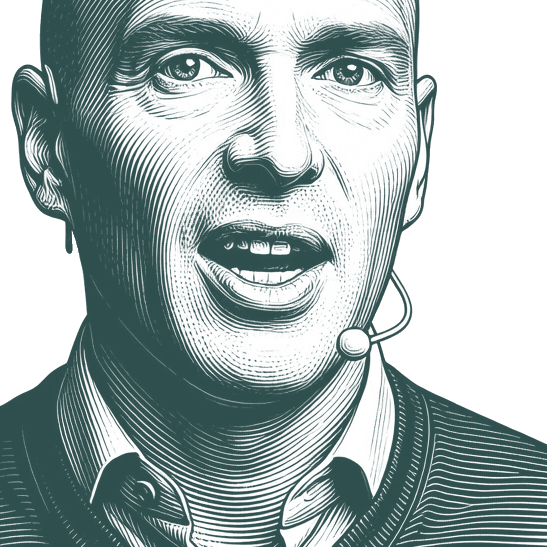
Ben Horowitz (born June 13, 1966) is an American businessman, investor, blogger, and author.
Bio from: Wikiquote (CC BY-SA 4.0) · Portrait adapted from: Wikimedia Commons, TechCrunch (CC BY)
From Wikidata (CC0)
The Struggle is not failure, but it causes failure. Especially if you are weak. Always if you are weak. Most people are not strong enough. Every great entrepreneur from Steve Jobs to Mark Zuckerberg went through the Struggle and struggle they did, so you are not alone. But that does not mean that you will make it. You may not make it. That is why it is the Struggle. The Struggle is where greatness comes from.
Gentlemen, I’ve done many deals in my lifetime and through that process, I’ve developed a methodology, a way of doing things, a philosophy if you will. Within that philosophy, I have certain beliefs. I believe in artificial deadlines. I believe in playing one against the other. I believe in doing everything and anything short of illegal or immoral to get the damned deal done.” Michael had a way of making things extremely clear. We thanked him and headed to the airport. We called both EDS and IBM to let them know that we would complete the process over the next eight weeks and sell the Loudcloud business to someone. If they wanted to play, they had to move on that schedule or withdraw immediately. The Michael Ovitz artificial deadline was in full effect.
Works in ChatGPT, Claude, or Any AI
Add semantic quote search to your AI assistant via MCP. One command setup.
Let’s look at the case of Opsware. Why did I sell Opsware? Another good question is why didn’t I sell Opsware until I did? At Opsware, we started in the server automation market. When we received our first inquiries and offers for the server automation company, we had fewer than fifty customers. I believed that there were at least ten thousand target customers and that we had a decent shot at being number one. In addition, although I knew the market would be redefined, I thought that we could expand to networks and storage (data center automation) faster than the competition and win that market as well. Therefore, assuming 30 percent market share, somebody would have had to pay sixty times what we were worth in forward credit to buy out our potential. You won’t be surprised to find that nobody was willing to pay that. Once we grew to several hundred customers and expanded into data center automation, we were still number one and were more valuable stand-alone than any of the prior acquisition offers. At that point both Opsware and our main competitor, BladeLogic, had developed into full-fledged companies (worldwide sales forces, built-out professional services, etc.). This was significant, because it meant that a large company could buy one of us and potentially execute successfully (big enterprise companies can’t generally succeed with small acquisitions, because too much of the important intellectual property is the sales methodology, and big companies can’t build that).
We take care of the people, the products, and the profits — in that order.” It’s a simple saying, but it’s deep. “Taking care of the people” is the most difficult of the three by far and if you don’t do it, the other two won’t matter. Taking care of the people means that your company is a good place to work.
Enhance Your Quote Experience
Enjoy ad-free browsing, unlimited collections, and advanced search features with Premium.
Jason, the whole company is at your command. Whatever you need, I will make sure you get it. Anthony, Jason is going to work to deliver all the value that EDS expects, but he will fail. He will fail to deliver one hundred percent of expectations, so you are now in charge of finding out what they don’t expect, but want. You are in charge of finding the exciting value. When you do, we will deliver it.
I tell my kids, what is the difference between a hero and a coward? What is the difference between being yellow and being brave? No difference. Only what you do. They both feel the same. They both fear dying and getting hurt. The man who is yellow refuses to face up to what he’s got to face. The hero is more disciplined and he fights those feelings off and he does what he has to do. But they both feel the same, the hero and the coward. People who watch you judge you on what you do, not how you feel.” — CUS D’AMATO, LEGENDARY BOXING TRAINER
Your first day, your first week in an organization is when you’re observing each detail, figuring out where you stand. That’s when your sense of the culture gets seared in — especially if someone gets stabbed in the neck. That’s when you diagnose the power structure: Who can get things done, and why? What did they do to get in that position? Can you replicate it?
With this in mind, here are the basic steps to organizational design: 1. Figure out what needs to be communicated. Start by listing the most important knowledge and who needs to have it. For example, knowledge of the product architecture must be understood by engineering, QA, product management, marketing, and sales. 2. Figure out what needs to be decided. Consider the types of decisions that must get made on a frequent basis: feature selection, architectural decisions, how to resolve support issues. How can you design the organization to put the maximum number of decisions under the domain of a designated manager? 3. Prioritize the most important communication and decision paths. Is it more important for product managers to understand the product architecture or the market? Is it more important for engineers to understand the customer or the architecture? Keep in mind that these priorities will be based on today’s situation. If the situation changes, then you can reorganize. 4. Decide who’s going to run each group. Notice that this is the fourth step, not the first. You want to optimize the organization for the people — for the people doing the work — not for the managers. Most large mistakes in organizational design come from putting the individual ambitions of the people at the top of the organization ahead of the communication paths for the people at the bottom of the organization. Making this step four will upset your managers, but they will get over it. 5. Identify the paths that you did not optimize. As important as picking the communication paths that you will optimize is identifying the ones that you will not. Just because you deprioritized them doesn’t mean they are unimportant. If you ignore them entirely, they will surely come back to bite you. 6. Build a plan for mitigating the issues identified in step five. Once you’ve identified the likely issues, you will know the processes you will need to build to patch the impending cross-organizational challenge