British statesman (1804–1881)
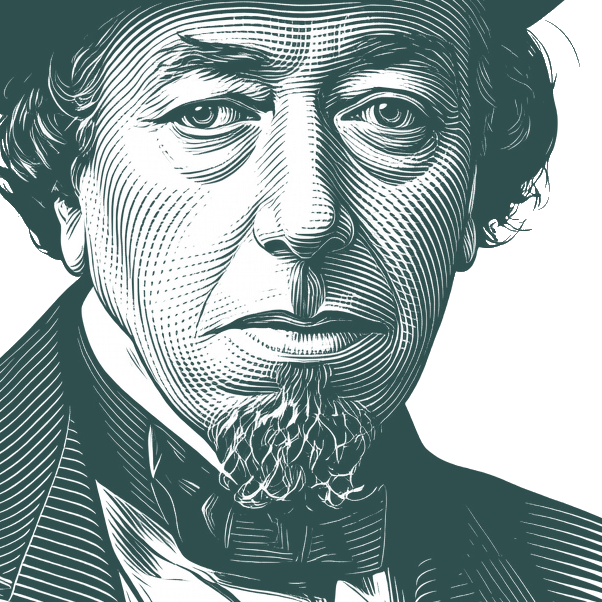
Benjamin Disraeli, 1st Earl of Beaconsfield (21 December 1804 – 19 April 1881) was a British politician, novelist, and essayist, serving twice as Prime Minister of the United Kingdom. The anniversary of his death on 19 April is known as Primrose Day.
Bio from: Wikiquote (CC BY-SA 4.0) · Portrait adapted from: Wikimedia Commons, Cornelius Jabez Hughes (Public domain / CC0)
From Wikidata (CC0)

I confess I am inclined to believe that an English gentleman—born to business, managing his own estate, administering the affairs of his county, mixing with all classes of his fellow-men, now in the hunting field, now in the railway direction, unaffected, un-ostentatious, proud of his ancestors, if they have contributed to the greatness of our common country—is, on the whole, more likely to form a senator agreeable to the English opinion and English taste than any substitute that has yet been produced.
The assault of Liberalism upon the House of Lords has been mainly occasioned by the prejudice of Liberalism against the land laws of this country. But in my opinion, and in the opinion of wiser men than myself, and of men in other countries beside this, the liberty of England depends much upon the landed tenure of England—upon the fact that there is a class which can alike defy despots and mobs, around which the people may always rally, and which must be patriotic from its intimate connection with the soil. Well, gentlemen, so far as these institutions of the country—the Monarchy and the Lords Spiritual and Temporal—are concerned, I think we may fairly say, without exaggeration, that public opinion is in favour of those institutions, the maintenance of which is one of the principal tenets of the Tory party, and the existence of which has been unceasingly criticised for forty years by the Liberal party.
The Jews represent the Semitic principle; all that is spiritual in our nature. They are the trustees of tradition, and the conservators of the religious element. They are a living and the most striking evidence of the falsity of that pernicious doctrine of modern times, the natural equality of man. The political equality of a particular race is a matter of municipal arrangement and depends entirely on political considerations and circumstances; but the natural equality of man now in vogue, and taking the form of cosmopolitan fraternity, is a principle which, were it possible to act on it, would deteriorate the great races and destroy all the genius of the world. What would be the consequence on the great Anglo-Saxon republic, for example, were its citizens to secede from their sound principle of reserve, and mingle with their negro and coloured populations? In the course of time they would become so deteriorated that their states would probably be reconquered and regained by the aborigines whom they have expelled and who would then be their superiors.