The progress of science requires the growth of understanding in both directions, downward from the whole to the parts and upward from the parts to the whole. A reductionist philosophy, arbitrarily proclaiming that the growth of understanding must go only in one direction, makes no scientific sense. Indeed, dogmatic philosophical beliefs of any kind have no place in science.
theoretical physicist and mathematician (1923–2020)
Freeman John Dyson (15 December 1923 – 28 February 2020) was an English-born American physicist, mathematician, and futurist, famous for his work in quantum mechanics, nuclear weapons design and policy, and the search for extraterrestrial intelligence. He was the winner of the Templeton Prize in the year 2000.
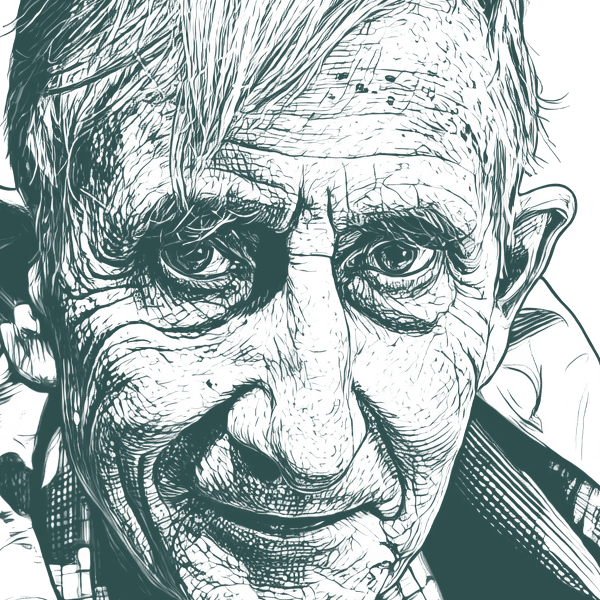
Bio from: Wikiquote (CC BY-SA 4.0) · Portrait adapted from: Wikimedia Commons, ioerror (CC BY-SA)
Birth Name:
Freeman John Dyson
Alternative Names:
Freeman J. Dyson
From Wikidata (CC0)
Showing quotes in randomized order to avoid selection bias. Click Popular for most popular quotes.
I do not claim any ability to read God's mind. I am sure of only one thing. When we look at the glory of stars and galaxies in the sky and the glory of forests and flowers in the living world around us, it is evident that God loves diversity. Perhaps the universe is constructed according to a principle of maximum diversity.
What philosophical conclusions should we draw from the abstract style of the superstring theory? We might conclude, as Sir James Jeans concluded long ago, that the Great Architect of the Universe now begins to appear as a Pure Mathematician, and that if we work hard enough at mathematics we shall be able to read his mind. Or we might conclude that our pursuit of abstractions is leading us far away from those parts of the creation which are most interesting from a human point of view. It is too early yet to come to conclusions.
Over periods of 10,000 years the distinctions between Western and Eastern and African cultures lose all meaning. Over a time span of 100,000 years we are all Africans. And over a time span of 300 million years we are all amphibians, waddling uncertainly out of dried-up ponds onto the alien and hostile land.
Greene takes it for granted, and here the great majority of physicists agree with him, that the division of physics into separate theories for large and small objects is unacceptable. ... Greene believes that there is an urgent need to find a theory of quantum gravity that applies to large and small objects alike. ... As a conservative, I do not agree that a division of physics into separate theories for large and small is unacceptable. ... The essence of any theory of quantum gravity is that there exists a particle called the graviton ... I looked at various possible ways of detecting gravitons and did not find a single one that worked. Because of the extreme weakness of the gravitational interaction, any putative detector of gravitons has to be extremely massive. If the detector has normal density, most of it is too far from the source of gravitons to be effective, and if it is compressed to a high density around the source it collapses into a black hole. There seems to be a conspiracy of nature to prevent the detector from working.
Science as subversion has a long history. ... Davis and Sakharov belong to an old tradition in science that goes all the way back to the rebels Benjamin Franklin and Joseph Priestley in the eighteenth century, to Galileo and Giordano Bruno in the seventeenth and sixteenth. If science ceases to be a rebellion against authority, then it does not deserve the talents of our brightest children. ... We should try to introduce our children to science today as a rebellion against poverty and ugliness and militarism and economic injustice.
Science and religion are two human enterprises sharing many features. They share these features also with other enterprises such as art, literature and music. The most salient features of all these enterprises are discipline and diversity. Discipline to submerge the individual fantasy in a greater whole. Diversity to give scope to the infinite variety of human souls and temperaments. Without discipline there can be no greatness. Without diversity there can be no freedom. Greatness for the enterprise, freedom for the individual — these are the two themes, contrasting but not incompatible, that make up the history of science and the history of religion.
The principle of maximum diversity says that the laws of nature, and the initial conditions at the beginning of time, are such as to make the universe as interesting as possible. As a result, life is possible but not too easy. Maximum diversity often leads to maximum stress. In the end we survive, but only by the skin of our teeth. This is the confession of faith of a scientific heretic. Perhaps I may claim as evidence for progress in religion the fact that we no longer burn heretics.
"The nuclear arms race is over, but the ethical problems raised by nonmilitary technology remain. The ethical problems arise from three "new ages" flooding over human society like tsunamis. First is the Information Age, already arrived and here to stay, driven by computers and digital memory. Second is the Biotechnology Age, due to arrive in full force early in the next century, driven by DNA sequencing and genetic engineering. Third is the Neurotechnology Age, likely to arrive later in the next century, driven by neural sensors and exposing the inner workings of human emotion and personality to manipulation."
All through our history, we have been changing the world with our technology. Our technology has been of two kinds, green and grey. Green technology is seeds and plants, gardens and vineyards and orchards, domesticated horses and cows and pigs, milk and cheese, leather and wool. Grey technology is bronze and steel, spears and guns, coal and oil and electricity, automobiles and airplanes and rockets, telephones and computers. Civilization began with green technology, with agriculture and animal-breeding, ten thousand years ago. Then, beginning about three thousand years ago, grey technology became dominant, with mining and metallurgy and machinery. For the last five hundred years, grey technology has been racing ahead and has given birth to the modern world of cities and factories and supermarkets.
The dominance of grey technology is now coming to an end.
PREMIUM FEATURE
Advanced Search Filters
Filter search results by source, date, and more with our premium search tools.
He aquí cómo describía la situación el propio Einstein: Cuando estaba en el séptimo grado en el Luitpold Gymnasium de Múnich, fui convocado por mi tutor, que me expresó el deseo de que yo abandonara el centro. Al decirle yo que no había hecho nada malo, se limitó a contestar: «Su mera presencia hace que la clase me pierda el respeto». Einstein se alegró de poder ayudar al profesor.
Looking back upon this history, I disagree with Galison's conclusion. I do not see critical opalescence as a decisive factor in Einstein's victory. I see Poincare and Einstein equal in their grasp of contemporary technology, equal in their love of philosophical speculation, unequal only in their receptiveness to new ideas. Ideas were the decisive factor. Einstein made the big jump into the world of relativity because he was eager to throw out old ideas and bring in new ones. Poincare hesitated on the brink and never made the big jump. In this instance at least, Kuhn was right. The scientific revolution of 1905 was driven by ideas and not by tools.
The essence of Hilbert's program was to find a decision process that would operate on symbols in a purely mechanical fashion, without requiring any understanding of their meaning. Since mathematics was reduced to a collection of marks on paper, the decision process should concern itself only with the marks and not with the fallible human intuitions out of which the marks were reduced. In spite of the prolonged efforts of Hilbert and his disciples, the Entscheidungsproblem was never solved. Success was achieved only in highly restricted domains of mathematics, excluding all the deeper and more interesting concepts. Hilbert never gave up hope, but as the years went by his program became an exercise in formal logic having little connection with real mathematics. Finally, when Hilbert was seventy years old, Kurt Godel proved by a brilliant analysis that the Entscheindungsproblem as Hilbert formulated it cannot be solved.
Godel proved that in any formulation of mathematics, including the rules of ordinary arithmetic, a formal process for separating statements into true and false cannot exist. He proved the stronger result which is now known as Godel's theorem, that in any formalization of mathematics including the rules of ordinary arithmetic there are meaningful arithmetical statements that cannot be proved true or false. Godel's theorem shows conclusively that in pure mathematics reductionism does not work. To decide whether a mathematical statement is true, it is not sufficient to reduce the statement to marks on paper and to study the behavior of the marks. Except in trivial cases, you can decide the truth of a statement only by studying its meaning and its context in the larger world of mathematical ideas.