The British, by contrast, could rule India with more limited violence largely outsourced to native Sepoys, but their influence penetrated far more deeply. Firstly, they managed to pit several Hindu sub-groups against the mainstream: most obviously the Sikhs, for whom the status of separate religion was made of whole cloth, promoted as a social reality and underpinned at the scholarly level.
Belgian author
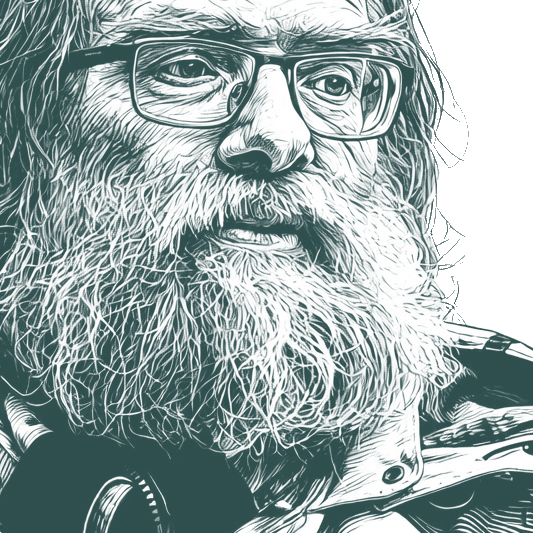
Koenraad Elst (born 7 August 1959) is a Flemish right wing Hindutva author, known primarily for his support of the Out of India theory and the Hindutva movement. Scholars have accused him of harboring Islamophobia.
Bio from: Wikiquote (CC BY-SA 4.0) · Portrait adapted from: Wikimedia Commons, Rosehubwiki (CC BY-SA)
Alternative Names:
Elst, Koenraad
From Wikidata (CC0)
Showing quotes in randomized order to avoid selection bias. Click Popular for most popular quotes.
To be sure, economic and political dimensions of religious activity also exist, and may present legitimate objects of study. We can’t hold it against Jacobsen individually that he chose this theme, but having followed the scene for decades, we know that the academic authorities in this field do channel all scholarly energy towards this reductionist view of Hinduism. This is much less true for other religions: it is Hinduism that is very disproportionately targeted for reduction to its external dimension.
Moreover, the majority of humanity belongs to nations who entered their present habitat less than 5000 years ago.,, Labelling inhabitants of 5 millennia as invaders is the most cranky form of irredentism ever enacted; it can have no place in serious political thought, and it is tells quite a story that such things are heard in India... ‘Trying to disprove that one’s ancestors migrated into their present habitat 5000 years ago, should be a strictly academic exercise with absolutely no political consequences for the present, if only because it is applicable to the majority of mankind, including many “natives” who have (by committing mostly unrecorded aggressions) displaced other natives. Unfortunately, India, with its sense of organic unity in disarray, is attracting vultures who have the effrontery to label the bulk of the Hindu population as invaders in order to justify their own imperialist or separatist schemes.
In NRI papers, you can occasionally read the testimony annex warning of Hindu women who sorely regret their mistake of having married a Muslim. E.g. one Hindu woman from the West Midlands (UK) warns Hindus to be alert when "some undesirables (...) who cannot tolerate a Muslim girl marrying a Hindu boy even in a movie, let alone in real life (...) try to take advantage of the innocence of Hindu girls to trap them in marriages." When a Hindu girl is approached by a Muslim, "she should be immediately alerted that he is actually fulfilling the Islamic command of grabbing and converting non-believer women by all possible means. It is not a reflection of my personal bitterness, I remind you of fatwas issued by Mullahs in England for Muslim boys in colleges and universities to marry Christian, Hindu and Sikh girls". Pratibha Bhambri: "Hindu Girls, Don't Get Trapped!", India Post, 26/7/1996. The line about Muslims not tolerating a Muslim girl marrying a Hindu boy even in a movie refers to Mani Ratnam's movie Bombay, a target of Muslim protests for showing just such an affair.
How does the West look at India? The Western public is completely, and the professional India-watchers largely, dependent on information filtered by a Delhi bottleneck under firm Nehruvian control. This is not a matter of “sepoy” intellectuals blackening India and Hinduism at the behest of an American conspiracy. It is a two-way influence, with Indians trying to live up to Western fashions and Westerners trying to align with Indian ideological norms.
Why, in fact, has Romila Thapar been interviewed? Though she was already well-known, her hour of glory came with the unnecessary and artificial Ayodhya controversy. But in that controversy, she was on the wrong side. It doesn’t always come about, but in this case it did happen: justice. The wrong side, though absolutely dominant for more than a decade, was proven wrong. Her major claim to fame is now as the historian who was proven wrong, and this in a self-created controversy. I feel for her, she threw away her good reputation at the end of her career. Then again, she can still win it back by crossing the floor in time. She is in an excellent position, for instance, to create the much-needed dialogue between the different schools and disciplines in East and West; to stop the stonewalling, the guilt-by-association and the ridiculing that obstruct or poison the debate.
The Islamic claim to the Temple Mount in Jerusalem is even more transparently fraudulent... Any secularist willing to uphold this claim as historical? Or otherwise ready to show the courage of his conviction and demand that the Muslims relinquish their claim to the Temple Mount so as to be morally in a poistion to demand a similar abandonment of "mythical" claims from the Hindus?... In the case of Christians and Muslims, no one demands that they prove the historicity of the stories underlying the sacred status of their places of pilgrimage. Demanding the same of Hindus is an insulting display of double standards.
The Buddha made his own version of Hinduism, as any Hindu Guru is entitled to, and as arch-Hindus like the Vedic Seer Dirghatamas before him or the philosopher Shankara after him have also done. But he never broke away from any existing religion. On the contrary, when he was asked near the end of his life what the secrets of a stable society are, he mentioned among other things the continued respect for the existing sages, pilgrimages and (by definition pre-Buddhist) sacred places.
Such superstitions which are in flagrant conflict with scientific universalism, should be dealt with by intellectuals, and the state will have done more than its share if it does not impede the broadcasting of their criticism of these superstitions. The state should just refrain from banning books eventhough they hurt the feelings of those steeped in the said superstitions. It should refrain from pressurizing or boycotting or prosecuting people who perform their legitimate task of educating people concerning such superstitions. It should refrain from imposing history-distortions on schoolbooks, i.e. from concealing the truth about the evil effects of such superstitions. (That the Indian state is so far not secular enough to refrain from this sabotage of the intellectual struggle against superstition, is shown in ch. 12)
Limited Time Offer
Premium members can get their quote collection automatically imported into their Quotewise collections.
The Indian leader who came closest to implementing Mussolini's programme was Indira Gandhi with her abolition of Maharaja privileges, her nationalization of the banks, and her formally legal instauration of dictatorship in 1975... For the Fascist's daughter Sonia Manio, joining Indira Gandhi's regime must have felt like coming home except for the issue of natalism, all these points apply in ample measure to the Congress (Indira) of the 1970s.
India only calls itself secular since 1975, when Indira Gandhi’s Emergency dictatorship inserted the words ‘secular, socialist’ into the Constitutional description of India as a ‘democratic, federal republic’. That makes these two words the only ones in the Constitution that never went through a proper parliamentary debate; the least democratic part of it. In the days of the Constituent Assembly, by contrast, Dr B.R. Ambedkar, chairman of the Constitution Drafting Committee, explicitly refused to include ‘secular’. When, twenty-eight years later, the term did get inserted, it had acquired the meaning ‘anti-Hindu’, yet most Hindus accept the term because they naïvely assume it still has the meaning ‘secular’.
The debate has not genuinely altered the old consensus, but it has been an interesting case-study in manipulation by unscrupled academics. That, at least, seems to be a fair description of learned publications advertising themselves as “objective” studies of the controversy, but systematically concealing the arguments put forth by one of the parties.