We pass no judgment here upon the political systems of other countries, but neither Fascism nor Communism is in harmony with our temperament and creed. We will have nothing to do with either of them here. And yet, whatever differences there may be between us and other nations on that subject, do not forget that we are all members of the human race and subject to the like passions and affections and fears and desires. There must be something in common between us if only we can find it, and perhaps by our very aloofness from the rest of Europe we may have some special part to play as conciliator and mediator. An ancient historian once wrote of the Greeks that they had made gentle the life of the world. I do not know whether in these modern days it is possible for any nation to emulate the example of the Greeks, but I can imagine no nobler ambition for an English statesman than to win the same tribute for his own country.
Prime Minister of the United Kingdom from 1937 to 1940
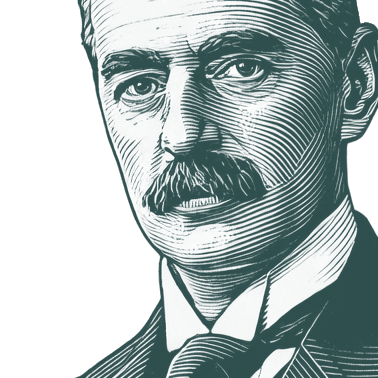
Arthur Neville Chamberlain (18 March 1869 – 9 November 1940) was a British politician. After a period as Lord Mayor of Birmingham, he entered national politics and was Chairman of the Conservative Party from 1929 to 1931. During the National Government of Ramsay MacDonald, Chamberlain served as Chancellor of the Exchequer. He later succeeded Stanley Baldwin as Prime Minister of the United Kingdom in 1937. Chamberlain negotiated the Munich Agreement with Adolf Hitler (Hitler never intended to honour it) and declared war in September 1939 owing to a mutual defence pact with Poland, which Hitler's Germany had invaded. He was forced to resign after the Norway Debate eight months into World War II and was replaced by Winston Churchill, who had been a leading critic of Chamberlain's foreign policy of appeasement. Since his death, Chamberlain has been viewed highly unfavorably among the general public, journalists, and politicians due to his foreign policy and handling of the war, although historians remain divided on whether this reputation is warranted.
Bio from: Wikiquote (CC BY-SA 4.0) · Portrait adapted from: Wikimedia Commons, Lafayette Ltd (Public domain / CC0)
Birth Name:
Arthur Neville Chamberlain
Alternative Names:
Rt. Hon. Arthur Neville Chamberlain
From Wikidata (CC0)

Showing quotes in randomized order to avoid selection bias. Click Popular for most popular quotes.
For a long period now we have been engaged in this country in a great programme of rearmament, which is daily increasing in pace and in volume. Let no one think that because we have signed this agreement between these four Powers at Munich we can afford to relax our efforts in regard to that programme at this moment. Disarmament on the part of this country can never be unilateral again. We have tried that once, and we very nearly brought ourselves to disaster. If disarmament is to come it must come by steps, and it must come by the agreement and the active co-operation of other countries. Until we know that we have obtained that co-operation and until we have agreed upon the actual steps to be taken, we here must remain on guard.
There can have been few occasions in all our long political history when to the son of a man who counted for something in his day and generation has been vouchsafed the privilege of setting the seal on the work which the father began but had perforce to leave unfinished. Nearly 29 years have passed since Joseph Chamberlain entered upon his great campaign in favour of Imperial Preference and Tariff Reform. More than 17 years have gone by since he died, without having seen the fulfilment of his aims and yet convinced that, if not exactly in his way, yet in some modified form his vision would eventually take shape. His work was not in vain. Time and the misfortunes of the country have brought conviction to many who did not feel that they could agree with him then. I believe he would have found consolation for the bitterness of his disappointment if he could have foreseen that these proposals, which are the direct and legitimate descendants of his own conception, would be laid before the House of Commons, which he loved, in the presence of one and by the lips of the other of the two immediate successors to his name and blood.
[O]ur people see that in the absence of any powerful ally, and until our armaments are completed, we must adjust our foreign policy to our circumstances, and even bear with patience and good humor actions which we should like to treat in very different fashion. I do not myself take too pessimistic a view of the situation. The dictators are too often regarded as though they were entirely inhuman. I believe this idea to be quite erroneous. It is indeed the human side of the dictators that makes them dangerous, but on the other hand, it is the side on which they can be approached with the greatest hope of successful issue.
Limited Time Offer
Premium members can get their quote collection automatically imported into their Quotewise collections.
In the afternoon of to-day it was apparent that the essential unity could be secured under another Prime Minister, though not myself. In these circumstances my duty was plain ... For the hour has now come when we are to be put to the test, as the innocent people of Holland, Belgium, and France are being tested already. And you, and I, must rally behind our new leader, and with our united strength, and with unshakable courage, fight and work until this wild beast, that has sprung out of his lair upon us, has been finally disarmed and overthrown.
I do not propose to say many words tonight. The time has come when action rather than speech is required. Eighteen months ago in this House I prayed that the responsibility might not fall upon me to ask this country to accept the awful arbitrament of war. I fear that I may not be able to avoid that responsibility. But, at any rate, I cannot wish for conditions in which such a burden should fall upon me in which I should feel clearer than I do to-day as to where my duty lies... We shall stand at the bar of history knowing that the responsibility for this terrible catastrophe lies on the shoulders of one man—the German Chancellor, who has not hesitated to plunge the world into misery in order to serve his own senseless ambitions.
I myself was not born a little Conservative. I was brought up as a Liberal, and afterwards as a Liberal Unionist. The fact that I am here, accepted by you Conservatives as your Leader, is to my mind a demonstration of the catholicity of the Conservative Party, of that readiness to cover the widest possible field which has made it this great force in the country and has justified the saying of Disraeli that the Conservative Party was nothing if it was not a National Party.
After reading your letter I feel certain that you can get all essentials without war, and without delay. I am ready to come to Berlin myself at once to discuss arrangements for transfer with you and representatives of the Czech government, together with representatives of France and Italy if you desire. I feel convinced that we could reach agreement in a week. However much you distrust the Prague government's intentions, you cannot doubt the power of the British and French governments to see that the promises are carried out fairly and fully and forthwith. As you know, I have stated publicly that we are prepared to undertake that they shall be so carried out. I cannot believe that you will take the responsibility of starting a world war, which may end civilization, for the sake of a few days' delay in settling this long-standing problem.
The most common cry, and this of course is chronic in the U.S.A., is "why are we always too late? why do we let Hitler take the initiative?" ... The answer to these questions is simple enough, but the questioners would rather not believe it. It is, "because we are not yet strong enough". ... We have plenty of man-power, but it is neither trained nor equipped. We are short of many weapons of offence and defence. Above all, we are short of air power. If we could weather this year, I believe we should be able to remove our worst deficiencies.
The result was that when war did break out German preparations were far ahead of our own, and it was natural then to expect that the enemy would take advantage of his initial superiority to make an endeavour to overwhelm us and France before we had time to make good our deficiencies. Is it not a very extraordinary thing that no such attempt was made? Whatever may be the reason—whether it was that Hitler thought he might get away with what he had got without fighting for it, or whether it was that after all the preparations were not sufficiently complete—however, one thing is certain: he missed the bus.