English author
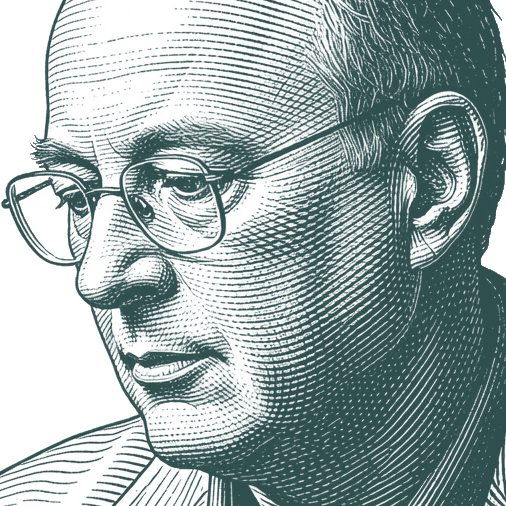
Philip Pullman CBE (born October 19, 1946) is an English writer. He is the best-selling author of His Dark Materials, a trilogy of fantasy novels, and a number of other books.
Bio from: Wikiquote (CC BY-SA 4.0) · Portrait adapted from: Wikimedia Commons, Photographed by Adrian Hon, http://mssv.net/ (CC BY-SA)
From Wikidata (CC0)

When we were alive, they told us that when we died we'd go to heaven. And they said that heaven was a place of joy and glory and we would spend eternity in the company of saints and angels praising the Almighty, in a state of bliss. That's what they said. And that's what led some of us to give our lives, and others to spend years in solitary prayer, while all the joy of life was going to waste around us and we never knew. Because the land of the dead isn't a place of reward or a place of punishment, it is a place of nothing. The good come here as well as the wicked, and all of us languish in this gloom forever, with no hope of freedom, or joy, or sleep, or rest, or peace. But now this child has come offering us a way out and I'm going to follow her. Even if it means oblivion, friends, I'll welcome it, because it won't be nothing. We'll be alive again in a thousand blades of grass, and a million leaves; we'll be falling in the raindrops and blowing in the fresh breeze; we'll be glistening in the dew under the stars and the moon out there in the physical world, which is our true home and always was.
Finally, I’d say to anyone who wants to tell these tales, don’t be afraid to be superstitious. If you have a lucky pen, use it. If you speak with more force and wit when wearing one red sock and one blue one, dress like that. When I’m at work I’m highly superstitious. My own superstition has to do with the voice in which the story comes out. I believe that every story is attended by its own sprite, whose voice we embody when we tell the tale, and that we tell it more successfully if we approach the sprite with a certain degree of respect and courtesy. These sprites are both old and young, male and female, sentimental and cynical, sceptical and credulous, and so on, and what’s more, they’re completely amoral: like the air-spirits who helped Strong Hans escape from the cave, the story-sprites are willing to serve whoever has the ring, whoever is telling the tale. To the accusation that this is nonsense, that all you need to tell a story is a human imagination, I reply, ‘Of course, and this is the way my imagination works.
"What work do I have to do then?" said Will, but went on at once, "No, on second thought, don't tell me. I shall decide what I do. If you say my work is fighting, or healing, or exploring, or whatever you might say, I'll always be thinking about it. And if I do end up doing that, I'll be resentful because it'll feel as if I didn't have a choice, and if I don't do it, I'll feel guilty because I should. Whatever I do, I will choose it, no one else."
Lyra at eighteen sitting intent and absorbed in Duke Humfrey’s Library with the alethiometer and a pile of leather-bound books. Tucking the hair back behind her ears, pencil in mouth, finger moving down a list of symbols, Pantalaimon holding the stiff old pages open for her … “Look, Pan, there’s a pattern there — see? That’s why they’re in that sequence!” And it felt as if the sun had come out. It was the second thing she said to Will next day in the Botanic Garden.
Try QuoteGPT
Chat naturally about what you need. Each answer links back to real quotes with citations.
One of the ghosts — an old woman — beckoned, urging her to come close. Then she spoke, and Mary heard her say: "Tell them stories. They need the truth. You must tell them true stories, and everything will be well, just tell them stories." That was all, and then she was gone. It was one of those moments when we suddenly recall a dream that we’ve unaccountably forgotten, and back in a flood comes all the emotion we felt in our sleep. It was the dream she’d tried to describe to Atal, the night picture; but as Mary tried to find it again, it dissolved and drifted apart, just as these presences did in the open air. The dream was gone. All that was left was the sweetness of that feeling, and the injunction to tell them stories.
We can control the future, my boy, just as we wind up the mechanism in a clock. Say to yourself: I will win that race — I will come first — and you wind up the future like clockwork. The world has no choice but to obey! Can the hands of that old clock in the corner decide to stop? Can the spring in your watch decide to wind itself up and run backward? No! They have no choice. And nor has the future, once you have wound it up.
The intentions of a tool are what it does. A hammer intends to strike, a vise intends to hold fast, a lever intends to lift. They are what it is made for. But sometimes a tool may have other uses that you don’t know. Sometimes in doing what you intend, you also do what the knife intends, without knowing.