English author
Philip Pullman CBE (born October 19, 1946) is an English writer. He is the best-selling author of His Dark Materials, a trilogy of fantasy novels, and a number of other books.
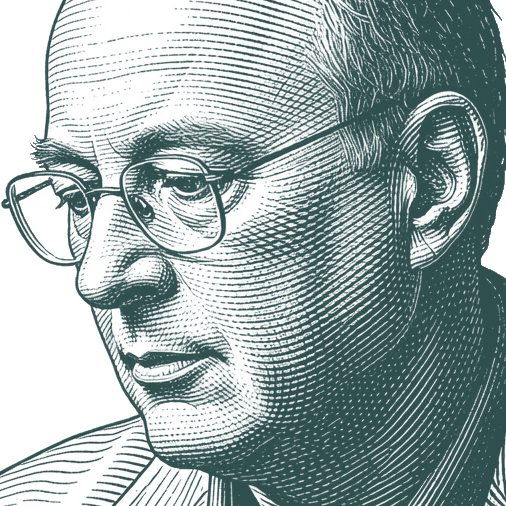
Bio from: Wikiquote (CC BY-SA 4.0) · Portrait adapted from: Wikimedia Commons, Photographed by Adrian Hon, http://mssv.net/ (CC BY-SA)
From Wikidata (CC0)

I'm perfectly well aware that you've found a doorway somewhere. I guess it's not too far from Summertown, where I dropped Lizzie, or Lyra, this morning. And that through the doorway is another world, one with no grownups in it. Right so far? Well, you see, the man who made that doorway has got a knife. He's hiding in that other world right now, and he's extremely afraid. He has reason to be. If he's where I think he is, he's in an old stone tower with angels carved around the doorway. The Torre degli Angeli.
"From now on, every ghost who enters the world of the dead will have to come with a story, the story of his or her life, and tell it to the harpies. It doesn't have to be a big adventure; it can just be a description of a day playing with the children, like Lyra's, or whatever it might happen to be. In exchange for this true story, the harpies will lead that ghost outside to dissolve into the Universe and be one with everything else.
Of course, I stole that, as I stole everything else! I stole that from the Oresteia — the bargain Aeschylus's characters make with the Furies that are following them about. "You will be the guardians of this place, and we will worship you and we will give you honor," they say. Then the Furies are satisfied, and they leave off their pursuit of Orestes. There's nothing new in stories. It goes round again and again and again.
But that was something that I thought was a good way out for Lyra, and it did reassert the value of story. States it fully and clearly, brings it out. And also the value of realistic story. It's got to be true. And there's a moral consequence; for those who have eyes to see, they can see it: you have to live. You have to experience things to have a story to tell, and if you spend all your life playing video games, that will not do."
I told him I was going to betray you, and betray Lyra, and he believed me because I was corrupt and full of wickedness; he looked so deep I felt sure he'd see the truth. But I lied too well. I was lying with every nerve and fiber and everything I'd ever done...I wanted him to find no good in me, and he didn't. There is none.
Religion begins in story. Yes, it does, because religion is an attempt to make sense of what is incomprehensible to us, what is inexplicable, what is awe-inspiring, what is frightening, what moves us to great wonder, and so on. That is the religious impulse, and it is part of our psychological makeup — of everyone's psychological makeup.