president of the United States from 1969 to 1974 (1913–1994)
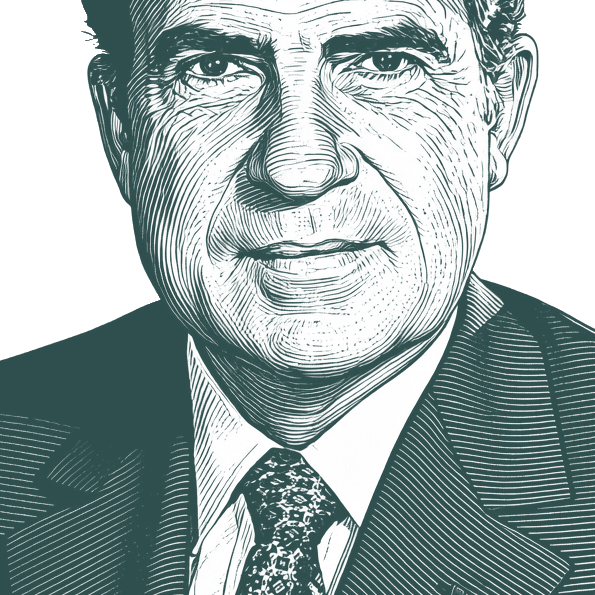
Richard Milhous Nixon (9 January 1913 – 22 April 1994) was the 37th president of the United States, serving from 1969 to 1974, when he became the only president to resign the office. Nixon had previously served as a Republican U.S. representative and senator from California from 1947 to 1952 and as the 36th vice president of the United States from 1953 to 1961.
Bio from: Wikiquote (CC BY-SA 4.0) · Portrait adapted from: Wikimedia Commons, Department of Defense. Department of the Army. Office of the Deputy Chief of Staff for Operations. U.S. Army Audiovisual Center. (ca. 1974 - 05/15/1984) (Public domain / CC0)
From Wikidata (CC0)

Our policies of assistance to the developing world are based not solely on altruism but also on self-interest. There are three major areas where our interests are affected by our policies toward the developing world: our economy, our security, and the ominous increase in the number of refugees clamoring to come to the United States ... unless the economies of the Southern Hemisphere grow, this flood of refugees from the developing world will become a deluge.
Try QuoteGPT
Chat naturally about what you need. Each answer links back to real quotes with citations.
Today, China’s economic power makes U.S. lectures about morality and human rights imprudent. Within a decade, it will make them irrelevant. Within two decades, it will make them laughable. By then the Chinese may threaten to withhold most-favored-nation status from the United States unless we do more to improve living conditions in Detroit, Harlem, and South-Central Los Angeles.
... China and Russia exist in an uneasy “Asian détente.” China’s hard-liners would prefer to see the failure of Yeltsin’s democratic government, because it would lessen the ideological threat of Russian democracy and weaken Russia’s ability to protect its interests in East Asia. At the same time, Chinese officials fear a new resurgent, nationalistic Russia because it would inevitably clash with China over important economic regions in East Asia and force China to divert its attention from other areas.
Works in ChatGPT, Claude, or Any AI
Add semantic quote search to your AI assistant via MCP. One command setup.
Now listen here: Printing top secret information. I don't care how they feel about the war. Whether they're for or against it. They can't and should not do this and attack the integrity of government and by God, I'm gonna fight that son of a bitching paper. They don't know what's gonna hit them now.
I think most Americans understood that the My Lai massacre was not representative of our people, of the war we were fighting, or of our men who were fighting it; but from the time it first became public the whole tragic episode was used by the media and the antiwar forces to chip away at our efforts to build public support for our Vietnam objectives and policies.
Unlimited Quote Collections
Organize your favorite quotes without limits. Create themed collections for every occasion with Premium.
Nixon: I still think we ought to take the North Vietnamese dikes out now. Will that drown people? Kissinger: About two hundred thousand people. Nixon: No, no, no, I'd rather use the nuclear bomb. Have you got that, Henry? Kissinger: That, I think, would just be too much. Nixon: The nuclear bomb, does that bother you?. I just want you to think big, Henry, for Christsakes.