American author, philosopher and neuroscientist (born 1967)
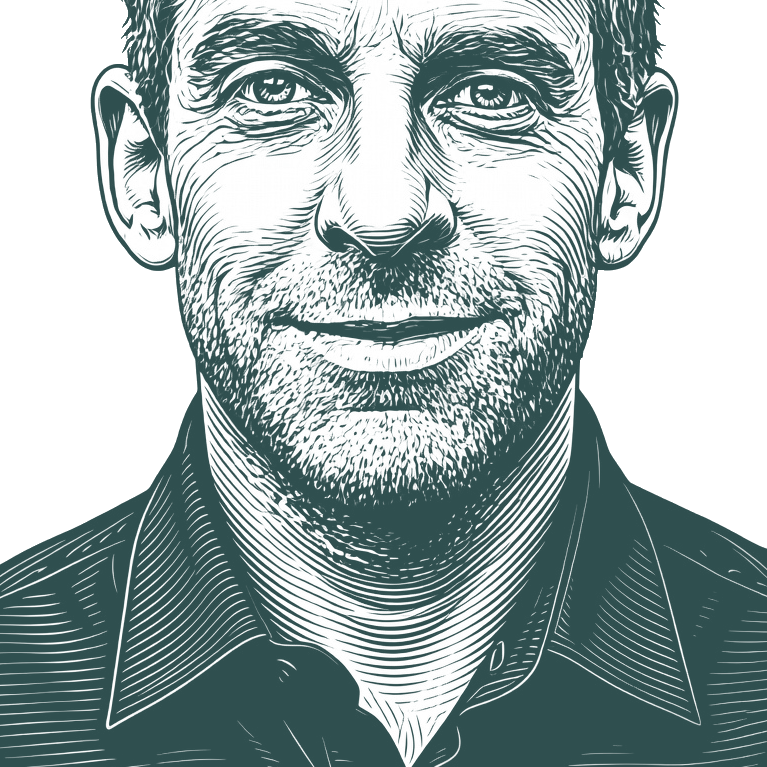
Samuel Benjamin Harris (born April 9, 1967) is an American author, philosopher, public intellectual, and neuroscientist, as well as the co-founder and CEO of Project Reason. He is the author of The End of Faith (2004), which won the PEN/Martha Albrand Award for First Nonfiction in 2005 and appeared on The New York Times best seller list for 33 weeks, Letter to a Christian Nation (2006), The Moral Landscape (2010), Lying (2011), Free Will (2012), and most recently Waking Up: A Guide to Spirituality Without Religion (2014).
Bio from: Wikiquote (CC BY-SA 4.0) · Portrait adapted from: Wikimedia Commons, Cmichel67 (Christopher Michel) (CC BY-SA)
From Wikidata (CC0)
All those books…which the church regards as sacred and canonical were written with all their parts under the inspiration of the Holy Spirit. Now, far from admitting the coexistence of error, Divine inspiration by itself excludes all error, and that also of necessity, since God, the Supreme Truth, must be incapable of teaching error.
However, when I look for the psychological cause of my behavior, I find it utterly mysterious. Why did I stop training 20 years ago? Well, certain things just became more important to me. But why did they become more important to me — and why precisely then and to that degree? And why did my interest in martial arts suddenly reemerge after decades of hibernation? I can consciously weigh the effects of certain influences — for instance, I recently read Rory Miller’s excellent book Meditations on Violence. But why did I read this book? I have no idea. And why did I find it compelling? And why was it sufficient to provoke action on my part (if, indeed, it was the proximate cause of my behavior)? And why so much action? I’m now practicing two martial arts and also training with Miller and other self-defense experts. What in hell is going on here? Of course, I could tell a story about why I’m doing what I’m doing — which would amount to my telling you why I think such training is a good idea, why I enjoy it, etc. — but the actual explanation for my behavior is hidden from me. And it is perfectly obvious that I, as the conscious witness of my experience, am not the deep cause of it.
it is true that meditation requires total acceptance of what is given in the present moment. If you are injured and in pain, the path to mental peace can be traversed in a single step: Simply accept the pain as it arises, while doing whatever you need to do to help your body heal. If you are anxious before giving a speech, become willing to feel the anxiety fully, so that it becomes a meaningless pattern of energy in your mind and body. Embracing the contents of consciousness in any moment is a very powerful way of training yourself to respond differently to adversity. However, it is important to distinguish between accepting unpleasant sensations and emotions as a strategy — while covertly hoping that they will go away — and truly accepting them as transitory appearances in consciousness. Only the latter gesture opens the door to wisdom and lasting change. The paradox is that we can become wiser and more compassionate and live more fulfilling lives by refusing to be who we have tended to be in the past. But we must also relax, accepting things as they are in the present, as we strive to change ourselves.
Choices, efforts, intentions, and reasoning influence our behavior — but they are themselves part of a chain of causes that precede conscious awareness and over which we exert no ultimate control. My choices matter — and there are paths toward making wiser ones — but I cannot choose what I choose. And if it ever appears that I do — for instance, after going back and forth between two options — I do not choose to choose what I choose. There is a regress here that always ends in darkness. I must take a first step, or a last one, for reasons that are bound to remain inscrutable.