American author, philosopher and neuroscientist (born 1967)
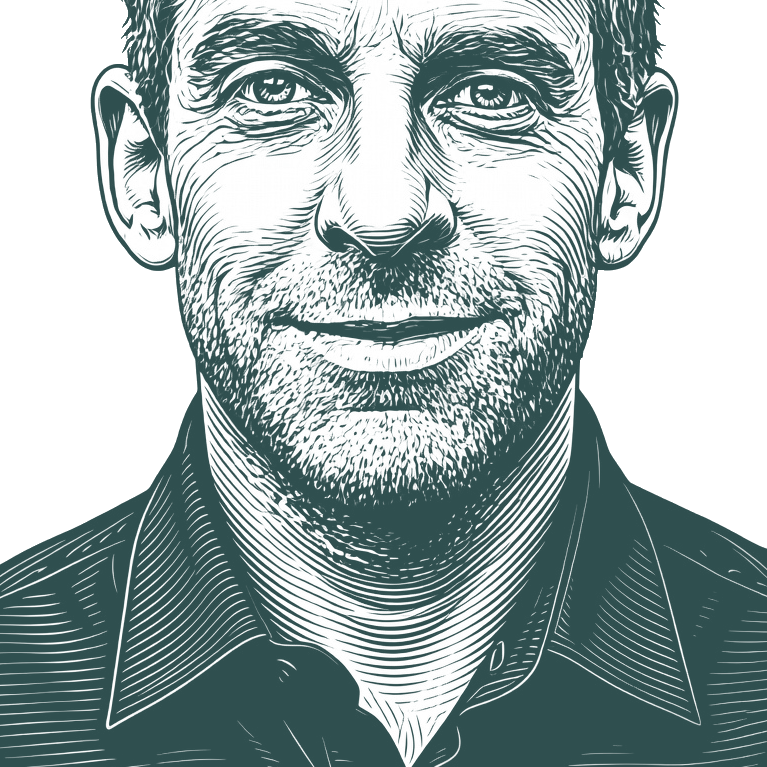
Samuel Benjamin Harris (born April 9, 1967) is an American author, philosopher, public intellectual, and neuroscientist, as well as the co-founder and CEO of Project Reason. He is the author of The End of Faith (2004), which won the PEN/Martha Albrand Award for First Nonfiction in 2005 and appeared on The New York Times best seller list for 33 weeks, Letter to a Christian Nation (2006), The Moral Landscape (2010), Lying (2011), Free Will (2012), and most recently Waking Up: A Guide to Spirituality Without Religion (2014).
Bio from: Wikiquote (CC BY-SA 4.0) · Portrait adapted from: Wikimedia Commons, Cmichel67 (Christopher Michel) (CC BY-SA)
From Wikidata (CC0)

Works in ChatGPT, Claude, or Any AI
Add semantic quote search to your AI assistant via MCP. One command setup.
The men who committed the atrocities of September 11 were certainly not 'cowards,' as they were repeatedly described in the Western media, nor were they lunatics in any ordinary sense. They were men of faith — perfect faith, as it turns out — and this, it must finally be acknowledged, is a terrible thing to be.
"Every one of the world's "great" religions utterly trivializes the immensity and beauty of the cosmos. Books like the Bible and the Koran get almost every significant fact about us and our world wrong. Every scientific domain — from cosmology to psychology to economics — has superseded and surpassed the wisdom of Scripture.
Everything of value that people get from religion can be had more honestly, without presuming anything on insufficient evidence. The rest is self-deception, set to music."
According to the most common interpretation of biblical prophecy, Jesus will return only after things have gone horribly awry. Imagine the consequences if any significant component of the U.S. government believed that the world was about to end and that its ending would be glorious. The fact that nearly half of the American population apparently believes this should be considered a moral and intellectual emergency.
If faith is what you have to go on, if faith is the link between your beliefs and the world at large, your beliefs are very likely to be wrong. Beliefs can be right or wrong. If you believe you can fly, that belief is only true if indeed you can fly. Somebody who thinks he can fly, and is wrong about it, will eventually discover there's a problem with his view of the world.
Advanced Search Filters
Filter search results by source, date, and more with our premium search tools.
Take a moment to think about the context in which your next decision will occur: You did not pick your parents or the time and place of your birth. You didn't choose your gender or most of your life experiences. You had no control whatsoever over your genome or the development of your brain. And now your brain is making choices on the basis of preferences and beliefs that have been hammered into it over a lifetime - by your genes, your physical development since the moment you were conceived, and the interactions you have had with other people, events, and ideas. Where is the freedom in this? Yes, you are free to do what you want even now. But where did your desires come from?
Are you really surprised by the endurance of religion? What ideology is likely to be more durable than one that conforms, at every turn, to our powers of wishful thinking? Hope is easy; knowledge is hard. Science is the one domain in which we human beings make a truly heroic effort to counter our innate biases and wishful thinking. Science is the one endeavor in which we have developed a refined methodology for separating what a person hopes is true from what he has good reason to believe. The methodology isn't perfect, and the history of science is riddled with abject failures of scientific objectivity. But that is just the point-these have been failures of science, discovered and corrected by-what, religion? No, by good science.
Imagine a world in which generations of human beings come to believe that
certain films were made by God or that specific software was coded by him.
Imagine a future in which millions of our descendants murder each other
over rival interpretations of Star Wars or Windows 98. Could anything — anything — be more ridiculous? And yet, this would be no more ridiculous
than the world we are living in.