American writer and filmmaker, professor, and activist (1933–2004)
Susan Sontag (16 January 1933 – 28 December 2004) was an American essayist, literary critic, cultural theorist, and political activist.
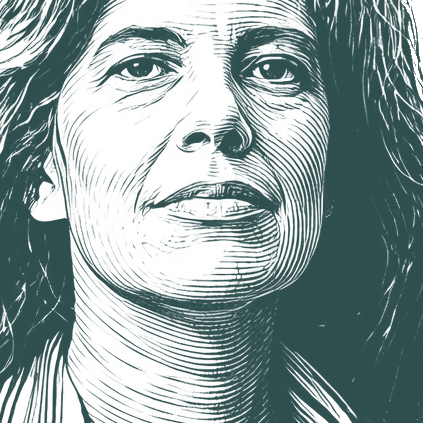
Bio from: Wikiquote (CC BY-SA 4.0) · Portrait adapted from: Wikimedia Commons, Lynn Gilbert (CC BY-SA)
From Wikidata (CC0)
Works in ChatGPT, Claude, or Any AI
Add semantic quote search to your AI assistant via MCP. One command setup.
As long as art is understood and valued as an “absolute” activity, it will be a separate, elitist one. Elites presuppose masses. So far as the best art defines itself by essentially “priestly” aims, it presupposes and confirms the existence of a relatively passive, never fully initiated, voyeuristic laity which is regularly convoked to watch, listen, read, or hear — and then sent away.
Compassion is an unstable emotion. It needs to be translated into action, or it withers. The question of what to do with the feelings that have been aroused, the knowledge that has been communicated. If one feels that there is nothing 'we' can do — but who is that 'we'? — and nothing 'they' can do either — and who are 'they' — then one starts to get bored, cynical, apathetic.
It isn’t that I like it and I don’t like it — that’s too simple. Or, if you will, it isn’t “both yes and no.” It’s “this but also that.” I’d love to settle in on a strong feeling or reaction. But, having seen whatever I see, my mind keeps on going and I see something else. It’s that I quickly see the limitations of whatever I say or whatever judgment I make about anything. There’s a wonderful remark of Henry James: “Nothing is my last word on anything.” There’s always more to be said, more to be felt.
As Cioran correctly points out, a principal danger of being overcivilized is that one all to easily relapses, out of sheer exhaustion and the unsatisfied need to be “stimulated,” into a vulgar and passive barbarism. Thus, “the man who unmasks his fictions” through an indiscriminate pursuit of the lucidity that is promoted by modern liberal culture “renounces his own resources and, in a sense, himself. Consequently, he will accept other fictions which will deny him, since they will not have cropped up from his own depth.” There, he concludes, “no man concerned with his own equilibrium may exceed a certain degree of lucidity and analysis.”
In contrast to the asexual chasteness of official communist art, Nazi art is both prurient and idealizing. A utopian aesthetics (physical perfection; identity as a biological given) implies an ideal eroticism: sexuality converted into the magnetism of leaders and the joy of followers. The fascist ideal is to transform sexual energy into a "spiritual" force, for the benefit of the community.
Soldiers now pose, thumbs up, before the atrocities they commit, and send off the pictures to their buddies and family. What is revealed by these photographs is as much the culture of shamelessness as the reigning admiration for unapologetic brutality. Ours is a society in which secrets of private life that, formerly, you would have given nearly anything to conceal, you now clamor to get on a television show to reveal.