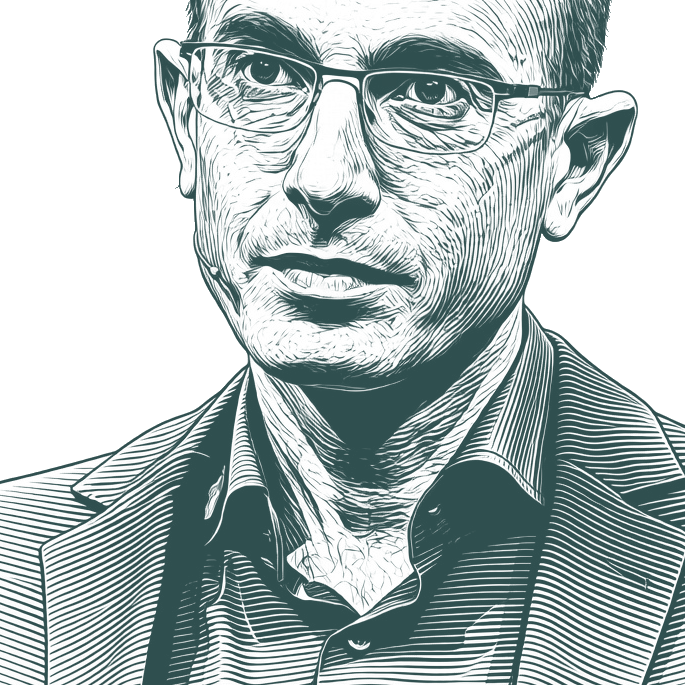
War is obsolete You are more likely to commit suicide than be killed in conflict Famine is disappearing You are at more risk of obesity than starvati… - Yuval Noah Harari
""
War is obsolete You are more likely to commit suicide than be killed in conflict Famine is disappearing You are at more risk of obesity than starvation Death is just a technical problem Equality is out – but immortality is in What does our future hold?
English
Collect this quote
About
Yuval Noah Harari
Yuval Noah Harari (Hebrew: יובל נח הררי; born 24 February 1976) is an Israeli professor of history at the Hebrew University of Jerusalem and the author of Sapiens: A Brief History of Humankind.
If you want to make people believe in imaginary entities such as gods and nations, you should make them sacrifice something valuable.
The most famous lenders in nature are vampire bats. These bats congregate in the thousands inside caves, and every night fly out to look for prey. When they find a sleeping bird or careless mammal, they make a small incision in its skin, and suck its blood. But not all vampire bats find a victim every night. In order to cope with the uncertainty of their life, the vampires loan blood to each other. A vampire that fails to find prey will come home and ask a more fortunate friend to regurgitate some stolen blood. Vampires remember very well to whom they loaned blood, so at a later date if the friend returns home hungry, he will approach his debtor, who will reciprocate the favour. However, unlike human bankers, vampires never charge interest.
Works in ChatGPT, Claude, or Any AI
Add semantic quote search to your AI assistant via MCP. One command setup.